

Schnelle Antwort: A Schmetterlingsgewebe (also called an invisible PU hole weft) is the best no-sew method for thin hair because it solves the three problems that disqualify other wefts on fine hair: its polyurethane base is just 0.8–1.2 mm thin — the flattest on the market, so nothing shows under a part line; it attaches with micro beads instead of sewing, so fragile strands never bear the tension of a braid-and-stitch foundation; and the hair anchors with no return hairs, so the underside never scratches a sensitive scalp. One 50 g pack covers a full head of fine hair, installs in 60–90 minutes, and reuses for 2–3 cycles. Below, the factory that manufactures them explains exactly why it wins on thin hair — and how to install it safely.
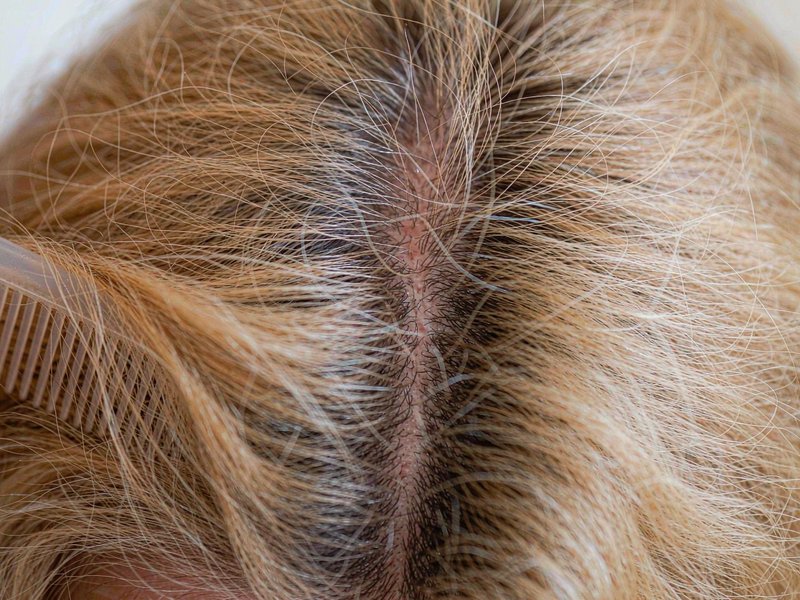
1. Introduction: Fine Hair’s Catch-22
Thin-haired clients have been told the same thing for years: you can’t wear wefts. Machine wefts are too heavy and too visible. Hand-tied wefts are gentle but demand sewing — and sewing needs a braid foundation, which needs a solid base of hair that fine hair simply doesn’t have. Tape-ins grip well but bond adhesive directly onto fragile strands that shed at every re-install.
The butterfly weft breaks the catch-22. Built on a scalp-translucent polyurethane strip with pre-punched holes, it installs with a hook, a bead, and pliers — no braid, no thread, no adhesive — and lies flat enough to disappear under a single layer of fine hair. We manufacture it daily and supply salons across Europe and North America, and the fine-hair transformation photos we receive back are the reason this construction keeps outselling expectations.
This guide explains, from the factory side, why the butterfly weft is the best no-sew method for thin hair: the construction logic, the tension math, the install workflow, aftercare, and what to check before buying.
2. What Is a Butterfly Weft? (30-Second Refresher)
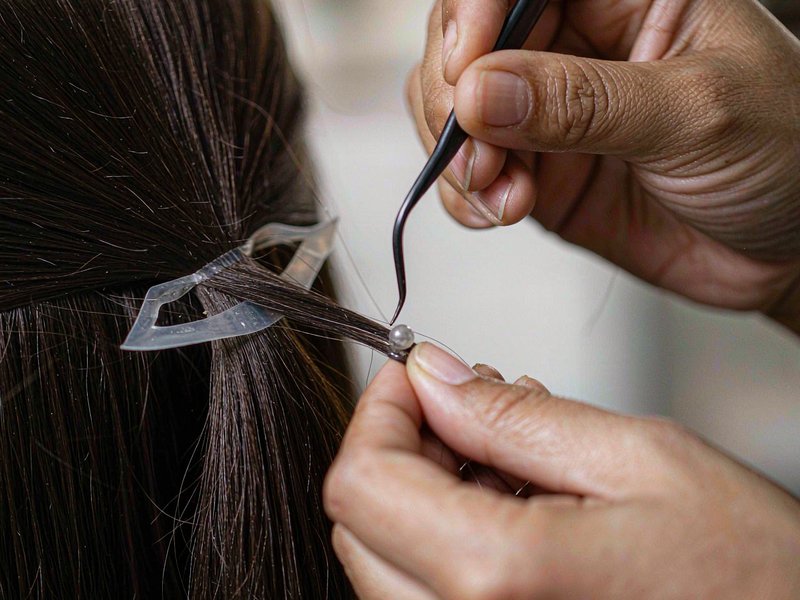
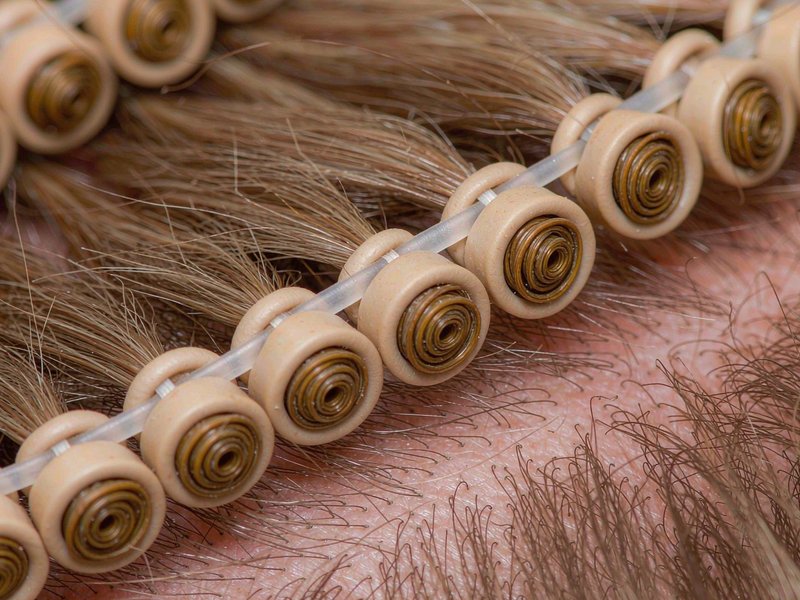
A butterfly weft is 100% Remy human hair anchored into a thin, translucent polyurethane base with evenly punched holes. Each hole is an attachment point: the stylist threads a section of the client’s natural hair through the hole together with a silicone-lined micro bead, clamps the bead flat, and the row is set. No sewing, no knots, no glue — which is why the method is called Nahtlose Installation.
The name comes from how it moves: the thin PU strip flexes and layers against the head’s curves like wings. For the full anatomy — base thickness, hole spacing, edge sealing — see our complete butterfly weft guide and our deep-dive on the invisible PU hole weft construction.
3. Why Thin Hair Struggles With Every Other Method
To understand why the butterfly weft wins, look at what disqualifies the alternatives:
- Machine wefts (5–8 mm): the track reads as a “shelf” under fine hair — visible in daylight, unhideable in a slick ponytail. Weight also outpaces what sparse strands can carry.
- Sew-in foundations: braiding a track through fine hair concentrates tension at every stitch. Fine strands break at the braid line within weeks, and the braid itself adds visible bulk.
- Hand-tied wefts: the gentlest sew-in option, but still requires that tension-heavy braid foundation — and cannot be cut, which complicates row planning on small, fine heads.
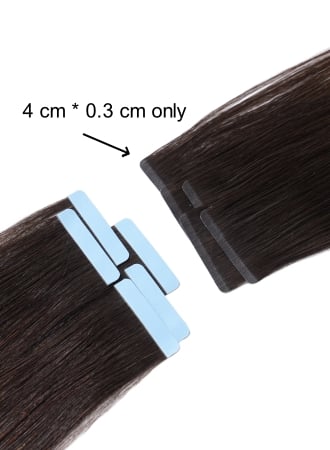
- Tape-ins: flat, yes — but adhesive on fine hair means more breakage at every removal, and fine hair often lacks the density to hide tape tabs at the part line.
- Clip-ins: temporary relief that costs density daily; clip pressure and daily friction add up on fragile hair.
Thin hair needs three things at once: flatness, minimal tension, and minimal handling. Only one weft delivers all three.
4. Reason One: The Thinnest Base on the Market
At 0.8–1.2 mm, the butterfly weft’s PU base is:
- 4–6 times thinner than a machine weft track (5–8 mm) — nothing to cast a shadow at the part line
- Thinner than a genius weft track (3–4 mm) and thinner than any tape tab
- Translucent, so it takes on the scalp’s tone instead of covering it
On thick hair, thickness is hidden. On thin hair, every millimeter shows — which is why this single spec decides the category. Clients can wear sleek ponytails, high buns, and flat-ironed middle parts with zero visible lines.
5. Reason Two: No-Sew Means the Lowest Possible Tension
Tension is what breaks fine hair, and the no-sew method minimizes it at every step:
- No braid foundation. Sew-ins concentrate stress along a braided track; butterfly wefts attach bead by bead, spreading the load across many small, independently clamped points.
- Tiny grip sections. Each bead holds a section about the width of one hole spacing (~1–1.5 cm) — small enough that fine hair isn’t overloaded per point.
- No adhesive, no solvents. Unlike tape-ins, removal opens a bead instead of dissolving glue — fragile strands are never soaked, scraped, or pulled.
- Adjustable clamp pressure. Silicone-lined beads compress gently; a stylist trained on fine hair sets them firm enough to hold without crushing the strand.
The result in practice: fine-haired clients report no “pulling” feeling from day one, and pass the eyebrow test — raising their brows with zero scalp lift — before leaving the chair.
6. Reason Three: No Return Hairs Against a Sensitive Scalp
Machine wefts fold hair over a cord, leaving thousands of short ends pointing back at the scalp — scratchy on any head, maddening on a fine, sensitive one. Butterfly wefts anchor strands through the base, so hair returns inside the weft:
- The underside is smooth from the first wear — no itching, no adjustment period
- No return frizz at the root line, which thin hair can least afford to hide
- Comfortable for clients who previously removed sew-ins because of scalp irritation
7. Reason Four: Lightweight, Cuttable Rows
A standard 50 g pack is often enough for a full head of fine hair — roughly half the weight of a typical machine-weft install. And because the weft cuts cleanly between holes without unraveling, stylists can:
- Size rows exactly to a small or asymmetric head shape
- Use fewer, lighter rows (2–3 instead of 4–5) tuned to the client’s density
- Stop a row behind the ear for short-layered clients, with zero waste
That combination — lightest base, lightest pack, custom-cut rows — is why salons treating fine-hair clients have made it their default recommendation.
8. How to Install a Butterfly Weft on Thin Hair: Step by Step
- Plan 2–3 light rows below the occipital bone and behind the ear line — lower than you would on thick hair, so the weight sits where fine hair is densest.
- Part a clean row and isolate a small section of natural hair, about the width of one hole spacing.
- Thread a silicone-lined micro bead auf den Abschnitt mit einem Hakenwerkzeug.
- Seat the weft hole flush against the bead, PU strip facing the scalp.
- Clamp flat with pliers — firm enough to hold, gentle enough for fine hair (bead choice matters; our weft tools range covers bead sizes for fine vs. medium density).
- Repeat along the row, keeping even spacing for even tension.
A full head on fine hair takes 60–90 minutes — about 40% faster than a sew-in, with no braid step and no fitting struggle. Prefer sewing? The holes don’t prevent it; some stylists add thread reinforcement only where a row needs it.
9. Butterfly Weft vs Other Methods on Thin Hair: The Table That Decides It
| Method | Dicke | Tension on fine hair | Abschneidbar? | Reusable | Fine-hair verdict |
|---|---|---|---|---|---|
| Maschinengewebung | 5–8 mm | High (weight + sew) | Nein | Yes | Visible, too heavy |
| Handgefügte Fäden | 2–3 mm | Medium–high (braid sew) | Nein | Yes | Gentle but needs braid |
| Genialer Fadenwurf | 3–4 mm | Medium (sew or beads) | Yes, anywhere | Yes | Strong second choice |
| Tape-in | Tab per panel | Adhesive stress per move-up | — | Limited | Breakage risk on fine hair |
| Butterfly weft | 0.8–1.2 mm | Lowest (per-bead, no-sew) | Ja, zwischen den Löchern | 2–3 cycles | Best all-round fit |
For balance: the genius weft remains the better pick when a client wants maximum density and is happy with a sew-in — our genius weft deep-dive und butterfly vs genius comparison map that trade-off. But on pure thin-hair fit — flatness, tension, and comfort — the butterfly weft is the category winner.
10. “Will It Damage My Thin Hair?” — The Honest Answer
Any attached method carries risk; the question is how controllable it is. Butterfly wefts rank lowest on damage risk for fine hair because:
- The load is spread across many small points instead of a continuous braided track
- 50 g total weight stays within what fine hair can carry (a common guideline is added weight below ~30% of natural hair weight)
- Move-ups every 6–8 weeks relocate the beads — no strand bears clamp pressure for more than one cycle
- No adhesive chemistry touches the hair
The two real damage sources are preventable: beads clamped too hard by an untrained stylist, and skipped move-ups that let growing hair tug at old beads. For the full tension-and-damage discussion, see our guide on whether wefts damage natural hair — the aftercare logic applies across constructions. Clients with oily scalps should read our oily scalp and slip guide, since bead slippage (not adhesive) is the failure mode to watch there.
11. Aftercare Routine for Fine Hair
- Wash 2–3 times weekly with sulfate-free shampoo diluted at the scalp; lather downward, never scrunch the base
- Brush twice daily with a loop brush, ends first, holding the root with the other hand
- Keep oils away from the bead line — oil migrates into the bead and PU strip and causes slipping
- Sleep in a loose low braid on a silk or satin pillowcase
- Keep heat tools off the PU base — direct high heat degrades polyurethane
- Move up every 6–8 weeks; the same wefts are re-beaded and reused
12. Customization: Built for Fine-Hair Clients Specifically
Because we manufacture butterfly wefts in-house, fine-hair specialization is a spec sheet, not a favor:
- 50 g packs (vs. standard 50/100 g) — half-weight coverage so stylists don’t over-pack fine heads
- Base tint options to match pale to deep scalp tones for true invisibility
- Durchmesser der Bohrung tunable for finer bead grids on fragile hair
- Custom color matching from a physical swatch — rooted and balayage shades that disguise sparse density
- Private label packaging for salons building their own fine-hair product line (see our wholesale butterfly weft guide)
The product we publish these specs against is our Schmetterlingsgewebte Extensions aus menschlichem Haar; the full range of constructions lives in our Katalog der Haarverstärkungs-Serie.
13. Who Should (and Shouldn’t) Choose It
Am besten geeignet für:
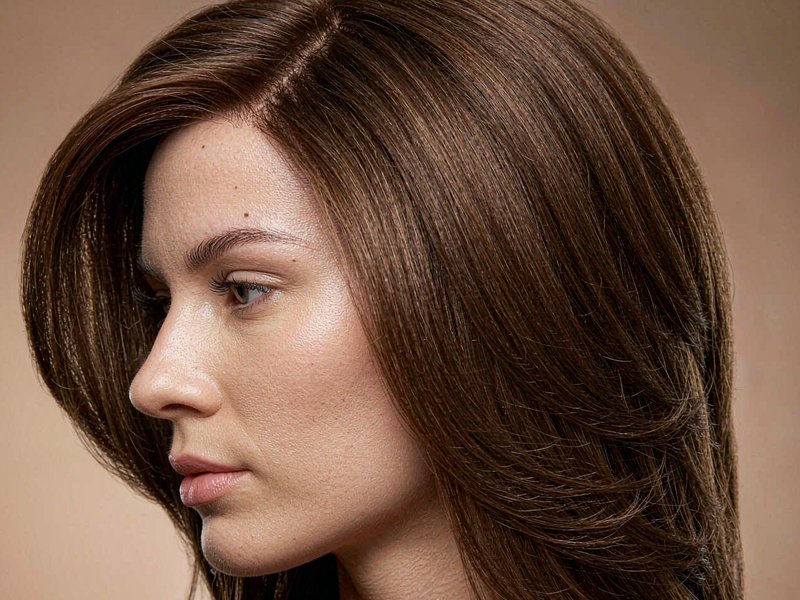
- Fine, thin, or fragile hair that can’t carry sew-in foundations
- Clients upgrading from tape-ins to escape adhesive breakage
- Sensitive scalps irritated by return hairs or braids
- Salons selling speed: a trained stylist completes a fine-hair full head in 60–90 minutes
Nicht ideal für:
- Very short hair (under ~10 cm of natural length gives beads nothing to grip)
- Clients seeking maximum volume density — a genius weft carries more grams per row
- Severely broken hairlines at the nape, where no attachment method should sit until recovery
14. Quality Checklist Before You Buy
Run these five tests on any butterfly weft sample — including ours:
- ✅ Bend the base double: brittle PU cracks within a month of washing; ours stays soft through 10x wash tests
- ✅ Pull-test beside two holes: strands should never slip — rough hole edges or loose anchoring fail here
- ✅ Cut between holes: the edge should hold with zero unraveling
- ✅ Confirm the hair grade in writing: 100% Remy, cuticle-aligned, double-drawn, zero synthetic or animal fiber
- ✅ Ask for batch QC evidence: wash, pull, and shedding tests on every production lot — sample quality must equal bulk quality, in writing
Our manufacturing and QC process is detailed in why craft matters when buying hair extensions; for samples and wholesale terms, Kontaktieren Sie das Everbeauting-Team. More buyer’s guides live on the Everbeauting blog.
15. Fazit
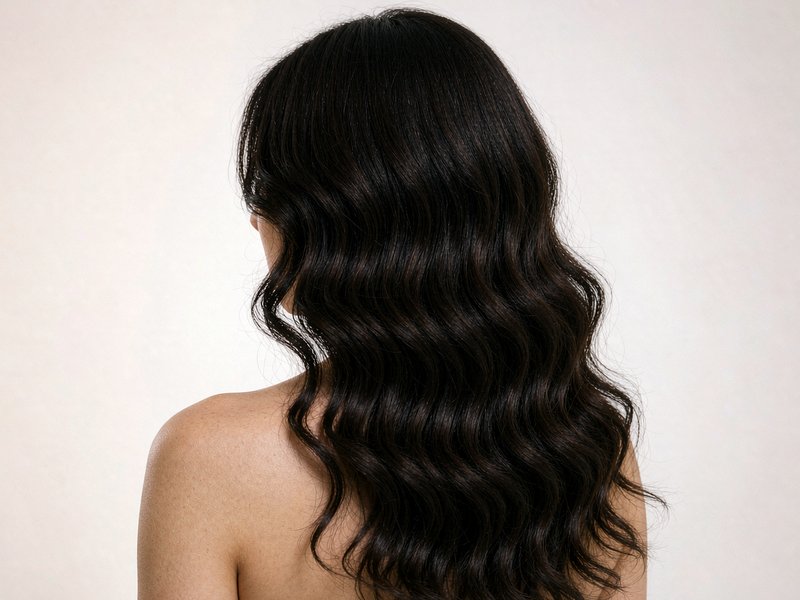
For thin hair, the butterfly weft is the best no-sew method not because of one feature, but because every spec lands where fine hair needs it: a 0.8–1.2 mm translucent base that disappears at the part line, per-bead attachment that replaces braid-and-stitch tension, a return-free underside for sensitive scalps, and 50 g custom-cut rows that never overload fragile strands. Add 2–3 reuse cycles and a 60–90 minute install, and the case closes itself.
The remaining variable is craft: clean-punched holes, soft-but-durable PU, and cuticle-aligned double-drawn hair, verified on every batch. Buy from a factory that tests what it ships — and thin-haired clients stop being “not candidates” and become your most loyal rebooking customers.
16. Über den Autor
Diese Anleitung wurde von Celine, vertreten durch Everbeauting Hair — a professional human hair extensions manufacturer and exporter serving salon chains, wholesalers, and private label brands across Europe and North America. Everbeauting manufactures butterfly (PU hole) wefts, genius wefts, injection tape-ins, and keratin bond extensions in-house, with strict batch QC, low-MOQ sample programs, and full private label support. Sample quality always equals bulk quality — request a sample kit and judge for yourself.
17. 10 Häufig gestellte Fragen
Q1: Are butterfly wefts good for thin hair?
Yes — they are arguably the best weft option for thin hair. The 0.8–1.2 mm translucent base is the flattest available, attachment uses small micro beads instead of a sewn braid, and a 50 g pack is usually enough for a full head, so fragile strands carry minimal weight.
Q2: What does “no-sew” installation actually mean?
The stylist threads the client’s natural hair through the weft’s punched holes together with a silicone-lined micro bead using a hook tool, then clamps the bead flat. No braiding, no thread, no needles — and no adhesive either.
Q3: Will butterfly wefts damage my fine hair?
When installed and maintained correctly, damage risk is the lowest of any attached method: load spreads across many small bead points, move-ups relocate beads every 6–8 weeks, and no solvents touch the hair. The preventable risks are over-tight clamping and skipped move-ups.
Q4: How many grams do I need for a full head of thin hair?
Typically one 50 g pack, sometimes supplemented to 100 g for clients who want dramatic volume. Thin hair needs fewer and lighter rows — 2–3 rows is standard.
Q5: Can I wear my hair up with butterfly wefts?
Yes. The flat PU base and low profile hide even under high ponytails and buns, which is one of the main upgrades over machine wefts for fine-haired clients.
Q6: How long do butterfly wefts last on thin hair?
6–8 weeks per install and 2–3 reuse cycles with proper care — roughly 4–6 months of active wear per weft. Timely move-ups matter most, because growing hair pulls at old beads.
Q7: Do butterfly wefts work on oily scalps?
They work, but beads (not adhesive) are the attachment, so slippage risk is far lower than with tape-ins. Wash more frequently, keep oils away from the bead line, and mention scalp type at the install so the stylist chooses the right bead size.
Q8: Can the wefts be cut to fit my head?
Yes — cut between the punched holes and the edge holds without unraveling. This lets stylists plan small, custom rows on fine hair with zero waste.
Q9: Butterfly weft vs genius weft for thin hair — which is better?
Butterfly wefts for lowest tension and the thinnest base; genius wefts for higher density with a sew-in. Many salons stock both. Our full comparison maps the trade-offs in detail.
Q10: Can I order butterfly wefts in custom shades and my own brand?
Yes. Everbeauting offers custom color matching, base tints, hole spacing, 50 g pack weights, and private label packaging with low MOQs — samples ship worldwide before any bulk commitment.
Verwandte Artikel aus dem Everbeauting-Blog
- Everbeauting Hair Extensions Blog — sourcing guides, salon tips, and product knowledge for professionals
- Was sind Butterfly-Weft-Haarrextensions? Eine vollständige Anleitung für Salons
- Butterfly Weft – menschliche Haarverlängerungen | Unsichtbarer PU-Futter
- Butterfly Weft vs. Genius Weft: Unterschiede, Vor- und Nachteile für Stylisten
- What Makes Genius Weft Stand Out? Cuttable No-Return-Hair Wefts
- Do Tape Ins Slip Easily With Oily Scalp?