


Quick answer: A wholesale butterfly weft is a human hair weft built on a thin, scalp-translucent polyurethane (PU) base with pre-punched holes, bought directly from a manufacturer in bulk and sold under your own brand — your logo on the packaging, your color codes in the catalog, your price list on the shelf. Because the butterfly (PU hole) weft installs without sewing, cuts cleanly between holes, and delivers the most invisible root line in the weft family, it has become one of the highest-margin private label categories for salon brands and distributors. In this guide, a factory that produces it daily explains MOQs, pricing structures, customization options, QC standards, and exactly how to launch your own branded weft line.
1. Introduction: Sell the Product, Own the Brand
Every salon brand eventually faces the same fork in the road: keep reselling someone else’s name, or build a weft line customers can only buy from you. Private label is how most of them cross over — and in 2026, the product more brands are putting their logo on than ever is the butterfly weft.
The reasons are commercial, not just aesthetic. Butterfly wefts — also sold as invisible PU hole wefts — solve two problems that used to keep wefts out of retail packaging: they install too fast for clients to call “inconvenient,” and they lie flat enough to photograph beautifully in a box. For a salon brand, that combination turns a technical product into a repeat-purchase retail item.
This guide is written from the factory floor, not from a trading desk. We’ll walk through what wholesale butterfly wefts actually cost to produce, what private label really includes, how MOQs work, what QC you should demand, and how to go from first sample to your own branded collection.
2. Why the Butterfly Weft Is the Smartest Private Label Weft in 2026
Before you put money into a branded line, the product itself has to earn repeat orders. The butterfly weft does, for four reasons:
- The most invisible base on the market. At 0.8–1.2 mm, the translucent PU strip disappears against the scalp — the single most quoted selling point in weft retail. We explain the full construction in our butterfly weft guide.
- No-sew installation. Stylists attach it with micro beads through the pre-punched holes — a full head in 60–90 minutes, roughly 40% faster than a sew-in. Faster chairs mean stylists reorder more often.
- Fine-hair friendly. Light tension and no return hairs make it the weft of choice for clients who were previously told “you can’t wear wefts.” That expands your addressable market instead of fighting over the same braid-and-sew customers.
- Reusable, so the story sells itself. With 2–3 reuse cycles per set, clients perceive strong value at retail prices — which is exactly what sustains a private label brand.
If you’re comparing constructions before committing, our butterfly weft vs genius weft comparison breaks down where each one wins.
3. What “Wholesale” Should Mean From a Manufacturer
The word “wholesale” gets stretched across this industry, so define it before you wire a deposit. Genuine factory wholesale means:
- You buy from the maker. The same entity that anchors the hair, punches the holes, and runs the wash tests is the one quoting you. No middleman adding margin to a product they have never touched.
- Tiered pricing by volume. Sample quantities, trial bulk quantities, and container-scale quantities should sit on one published ladder — not three quotes invented per phone call.
- Consistent batch quality. Your reorder in month eight must match your first order in color tone, base thickness, and density. Wholesale buyers live and die by batch consistency, because their customers review the second purchase, not the first.
- Documentation. Hair grade, fiber testing, and spec sheets in writing. A factory confident in its product puts it on paper.
That last point is where trading companies and true factories separate fastest. Ask any supplier to show you a production lot passing a 10x wash test — if the answer is a brochure, keep looking.
4. Inside Private Label: What Can Actually Be Customized
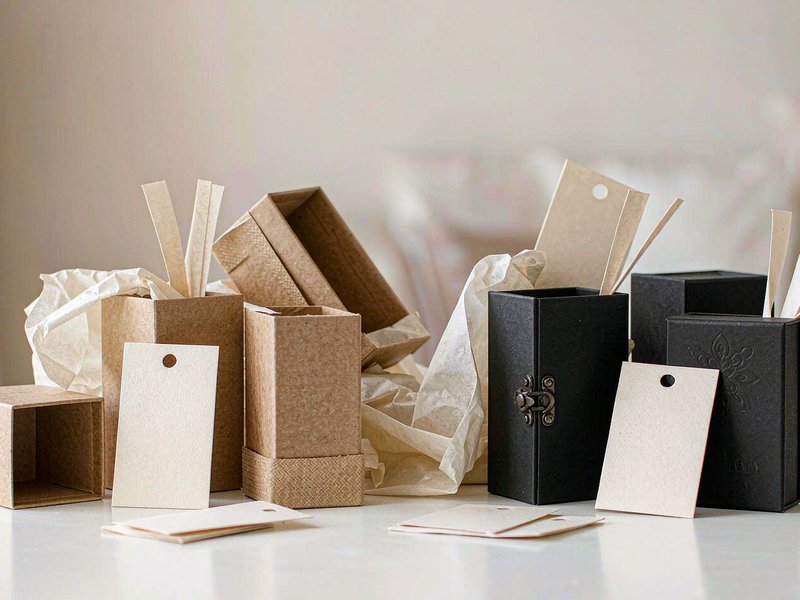
Level 1 — Packaging. Boxes, hang tags, care cards, and inner trays printed with your brand. At Everbeauting, private label packaging is engineered for retail display: your logo on the front, your care instructions inside, and color codes that match your own catalog rather than the factory’s numbering.
Level 2 — Product specs. Pack weight (50 g or 100 g), weft width, hole spacing (1–1.5 cm standard), base thickness, and base tint can all be tuned. A brand positioning around fine hair, for example, often specifies a lighter pack weight and thinner base for a flatter feel.
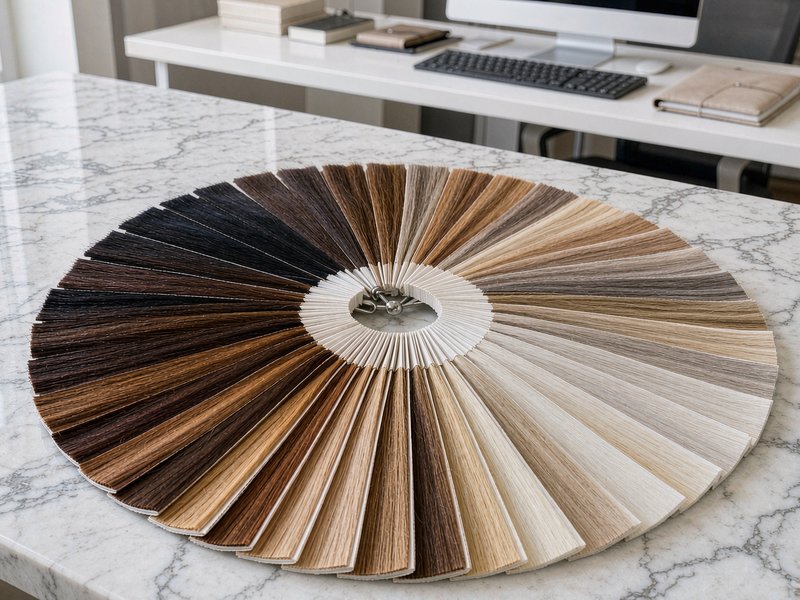
Level 3 — Color and texture. Custom color matching from a physical swatch or Pantone reference, plus straight, body wave, and custom-ordered deep wave. Your bestsellers become your proprietary shades — a real moat, because clients can’t find “your” balayage anywhere else.
Level 4 — Exclusive development. For established brands, that means developing a signature construction or a unique shade family under NDA. This is where a private label relationship stops being purchasing and becomes product development.
5. The MOQ Question, Answered Honestly
MOQ — minimum order quantity — is where most first conversations stall, so here’s how it works at a real factory:
- Samples: no meaningful MOQ. One to three sets, shipped worldwide, so you can pull-test, wash, cut, and install before any commitment. We treat the sample as our quality contract: sample quality must equal bulk quality, and we say so in writing.
- Trial bulk orders: low MOQ. Typically a few dozen packs per color, enough to stock a small launch or test three shades with your salon accounts. This tier exists to let brands verify that what passed the sample test also passed the production line.
- Scale orders: pricing steps down at each volume tier as material yield and labor efficiency improve. A serious supplier shows you the ladder up front instead of hiding the destination price.
If a supplier quotes a five-figure MOQ before you’ve seen a single sample, you are being asked to finance their confidence — or their inventory problem.
6. What Drives Wholesale Pricing on a Butterfly Weft
Wholesale pricing on PU hole wefts is built from four cost blocks:
- Raw hair grade. Cuticle-aligned Remy hair — the only grade that survives three washes without matting — costs multiples of acid-bathed non-Remy hair. This is the biggest and most tempting place for suppliers to cut corners, and the block where cheap quotes become expensive complaints.
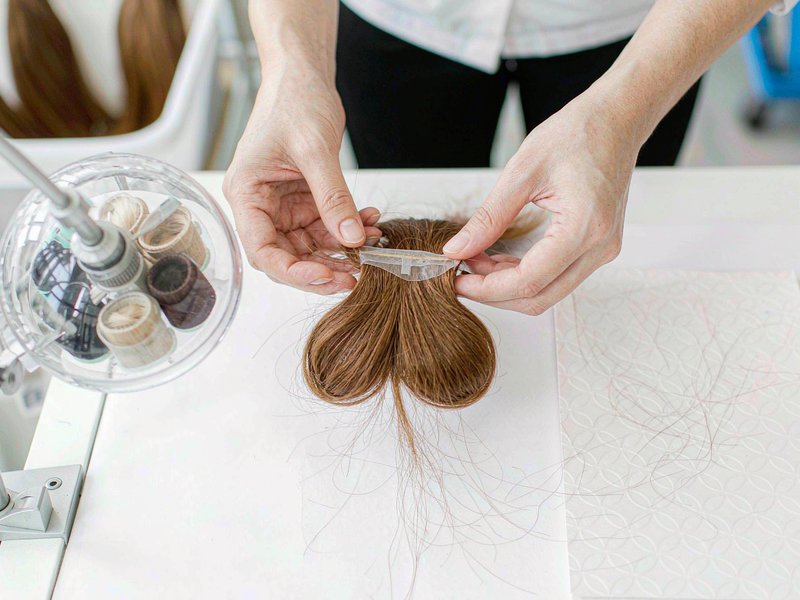
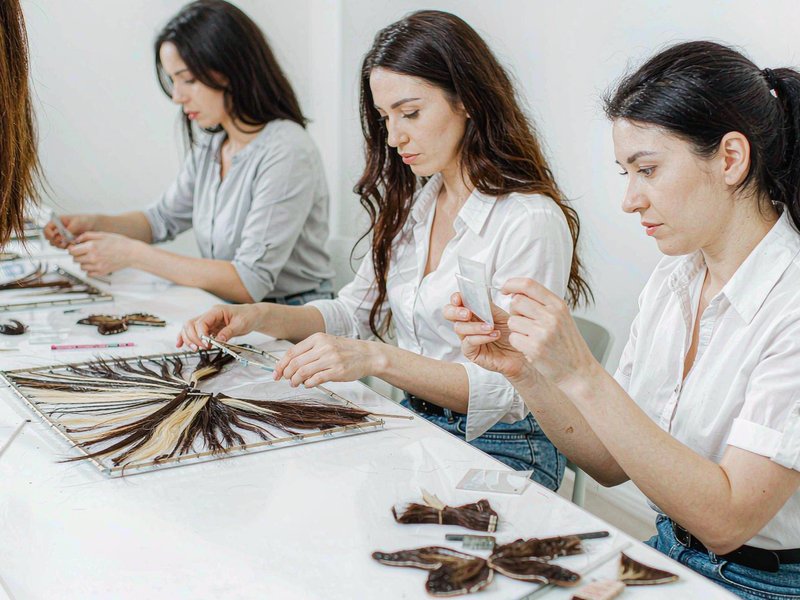
- Craft and labor. Hole punching with precision dies, deburring, anchoring, edge sealing, and per-batch pull testing. Every quality step is real labor; that’s why our craft standards define what you’re actually paying for.
- Length and shade. Longer lengths and double-drawn blondes cost more per gram than 14-inch naturals — your mix, not just your volume, decides the average unit price.
- Customization depth. Stock packaging with your sticker is the cheapest tier; full retail packaging with printed boxes and hang tags raises unit cost slightly and brand value substantially.
When you compare quotes across suppliers, normalize these blocks first. A quote 15% below market almost always means one block was quietly deleted.
7. Quality Control: The Tests Every Wholesale Batch Must Pass
This is the section to read twice, because QC is where wholesale relationships are won or lost. Every production lot of our butterfly wefts goes through:
- Pull tests at the attachment points. Gripping beside two punched holes and tugging firmly; any strand slippage fails the lot. Weak anchoring is the number-one hidden defect in PU hole wefts.
- Hole-edge inspection under magnification. A ragged hole edge sheds hair within weeks — invisible in the pack, ruinous in the salon.
- 10x wash tests. Repeated washing to verify the PU base stays soft instead of turning brittle and the hair keeps its cuticle alignment.
- White-paper shedding tests. Brushing over white paper so any stray strand is caught and counted.
- Colorfastness checks on every dyed and toned shade, because a balayage that lifts in the first wash is a refund, not a sale.
The commercial logic is simple: your salon accounts judge your brand on the second delivery. Batches are what make private label brands survive or collapse.
8. From First Sample to Your Own Collection: The Launch Process
Brands that succeed with private label follow the same disciplined path:
- Request samples of the actual product. Order the butterfly weft human hair extensions you intend to sell — not a “show sample” of something else. Pull-test the holes, cut between them, wash twice, install on a mannequin or a model.
- Match color and specs. Send your reference shades; approve the factory’s match on physical swatches before production.
- Approve pre-production samples. Your packaging, your logo, your specs — signed off on a physical unit, not a PDF mockup.
- Run a trial bulk order. Small enough to be low-risk, big enough to test real production output.
- Scale on schedule. Move to volume tiers once your salon accounts confirm repeat demand.
A workable brand launch typically runs six to ten weeks from color approval to stock in hand, depending on packaging complexity and the number of custom shades.
9. Lead Times, Shipping, and Working Across Time Zones
Wholesale buyers planning a launch date should budget three windows:
- Production: standard shades and stock specs move fastest; custom colors and full retail packaging add lead time. Confirm dates in writing per order, not per website banner.
- Shipping: international express for trial orders, air or sea freight consolidations for scale orders. We ship worldwide from China and support DDP quotations so landed cost is known before you commit.
- Communication: a factory that answers in your working hours with real production knowledge — not a sales script — is worth more than a 2% price difference. Ask technical questions before you ask for discounts; the quality of the answers predicts the quality of the partnership.
For current wholesale pricing and sample terms, contact the Everbeauting team — we respond with production facts, not brochures.
10. Color Programs and Catalog Building for Your Brand
A private label weft brand lives or dies by its color program. Practical guidance from watching dozens of brand launches:
- Launch narrow, not wide. Six to ten well-matched shades outsell a 40-shade wall with patchy stock. Depth on bestsellers beats breadth with backorders.
- Anchor on your market’s reality. European salon networks skew toward #60, #613, and rooted balayages; North American distributors move more #1B, #2, and piano tones. Build your six around your own sales data.
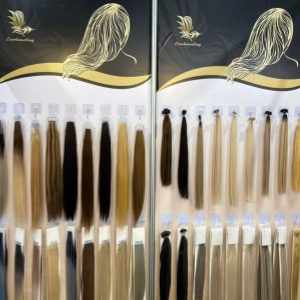
- Use a physical color ring. Digital screens cannot match hair tone. Order a branded color ring for your accounts — it doubles as a sales tool in every salon that hosts one.
11. Choosing Your Manufacturer: A Due Diligence Checklist
Before signing anything with any supplier — including us — run this checklist:
- ✅ Hair grade in writing: 100% Remy, cuticle-aligned, zero synthetic or animal fiber blending
- ✅ Sample = bulk clause: the sample you approve is the standard the shipment must meet
- ✅ Batch QC evidence: wash tests, pull tests, shedding counts — actual process, not brochure claims
- ✅ Private label capability proof: printed samples of packaging with a real logo, not mockups
- ✅ Transparent MOQ ladder: samples, trial, and scale pricing published up front
- ✅ Reference customers: at least one brand you can verify buys at scale
The full hair weft series catalog shows the range a capable factory produces in-house — breadth of real product lines is itself a credibility signal.
12. How Everbeauting Supports Private Label Partners
We are a manufacturer, not a reseller, and our private label program reflects that:
- In-house production of butterfly (PU hole) wefts, genius wefts, hand-tied wefts, injection tape-ins, and keratin bonds — so your brand can grow across categories with one supplier and one quality standard.
- Full customization: packaging, hang tags, care cards, color rings, hole spacing, base tint, pack weight, and exclusive shade development.
- Low-MOQ sample and trial tiers with worldwide shipping, because we would rather earn a volume relationship than gate it.
- Batch-level QC with sample-equals-bulk guarantees — the same discipline detailed in our guide to what human hair must mean on the label.
- Tool compatibility support: our wefts pair with standard weft installation tools and accessories, and we advise on bead sizing and hook selection for your stylist accounts.
For stylists transitioning from installation curiosity to retail confidence, our blog’s complete weft guide library covers every construction we manufacture.
13. Conclusion
Wholesale butterfly wefts are the rare product where factory quality, stylist convenience, and brand equity point the same direction: a sub-1.2 mm PU base with punched holes installs faster and looks more invisible than anything else in the weft family, and that story sells in retail packaging under any competent logo.
The work of private label is choosing the right partner — a factory that punches clean holes, anchors hair that survives pull tests, matches colors from physical swatches, and signs off that your approved sample equals your bulk shipment. Do the due diligence in this guide, start with samples, launch narrow with deep stock, and your brand’s weft line earns repeat orders the way every enduring extension brand has: one verifiably good batch at a time.
14. About The Author
This guide is written by Celine, representing Everbeauting Hair — a professional human hair extensions manufacturer and exporter serving salon chains, wholesalers, and private label brands across Europe and North America. Everbeauting manufactures butterfly (PU hole) wefts, genius wefts, injection tape-ins, and keratin bond extensions in-house, with strict batch QC, low-MOQ sample programs, and full private label support. Sample quality always equals bulk quality — request a sample kit and judge for yourself.
15. 10 Most-Asked Questions
Q1: What is a butterfly weft, in wholesale terms?
A human hair weft on a thin, translucent PU base with pre-punched holes, sold in bulk by the manufacturer for resale under the buyer’s brand. It installs with micro beads (no sewing), cuts cleanly between holes, and delivers the flattest root line of any weft construction.
Q2: What is the minimum order quantity for private label butterfly wefts?
Samples carry no meaningful MOQ — typically 1–3 sets. Trial bulk orders run at low MOQ (a few dozen packs per color), and scale tiers step down in price with volume. Confirm the exact ladder with your supplier before ordering.
Q3: Can I put my own logo and packaging on the products?
Yes. Boxes, hang tags, care cards, color rings, and inner trays can all be printed with your brand, and product specs — pack weight, hole spacing, base tint, shades — can be customized alongside the packaging.
Q4: How long does a private label order take?
From color and packaging approval, a typical launch runs six to ten weeks including trial production, depending on custom shades and packaging complexity. Standard shades with simple branding move fastest.
Q5: Are the wefts 100% human hair?
At Everbeauting, yes — 100% Remy, cuticle-aligned human hair, double-drawn, never blended with synthetic or animal fiber. Always get the hair grade confirmed in writing when comparing suppliers.
Q6: Can I order custom colors exclusive to my brand?
Yes. Colors are matched from physical swatches or Pantone references, and established partners can develop exclusive shade families. Approve the match on real hair, not screen images, before production.
Q7: How do I verify quality before committing to bulk?
Order samples and run the tests that matter: pull-test beside the holes, cut between two holes, wash twice, and install on a model. Then require a sample-equals-bulk clause so the standard you approved is the standard you receive.
Q8: What profit margin can salon brands expect?
Margins depend on your retail channel, but private label wefts typically carry substantially higher margins than reselling branded stock, because you buy at factory wholesale and set retail pricing on your own brand value. Reusable, repeat-purchase products like butterfly wefts sustain that margin across cycles.
Q9: Butterfly weft vs genius weft for a private label line — which to launch first?
Launch butterfly wefts for the fine-hair and fast-service story, or genius wefts for maximum density — many brands stock both from the same factory. Our full butterfly vs genius comparison covers the trade-offs in detail.
Q10: Do you ship worldwide and support DDP pricing?
Yes — Everbeauting ships worldwide from China and can quote DDP so your landed cost is fixed before you commit. Sample orders ship by international express; scale orders by air or sea consolidation.
Related Reading From The Everbeauting Blog
- Everbeauting hair extensions blog — sourcing guides, salon tips, and product knowledge for professionals
- Qu’est-ce que les extensions de cheveux en maille de papillon ? Un guide complet pour les salons
- Extensions de cheveux humains en franges de papillon | Frange invisible avec trou en PU
- Butterfly Weft vs Genius Weft : différences, avantages et inconvénients pour les stylistes
- Why Craft Matters When Buying Hair Extensions?