

What exactly is a genius weft, why is every salon asking for it, and how do you tell a true reinforced-edge genius weft from a rebranded hand-tied weft? A hair extensions manufacturer explains.
Quick answer: A genius weft is a hybrid weft construction that combines the ultra-thin, flexible profile of a hand-tied weft with the cut-anywhere strength of a machine weft. Hair is knotted into a fine, hand-tied lace edge that is then reinforced with a micro-machine stitch, producing a weft that is roughly 0.5–1 mm flat, sheds minimally, leaves no scratchy return hairs, and can be cut to size without unraveling. For salons, that means invisible installs on even fine, thin hair; for wholesalers, it means one of the fastest-growing premium weft categories in Europe and North America. At Everbeauting, genius wefts are produced on 100% Remy double-drawn hair with per-batch shedding and gram-weight QC.
Genius wefts are one of the most requested products in our factory right now — and also one of the most misunderstood. Buyers see the word “genius” on listings from a dozen suppliers and assume they are comparing like with like. They are not. Two products can both be called genius wefts and perform completely differently, because the name describes a construction category, not a quality standard. This guide explains what a genius weft actually is, how it differs from every other weft type, who it fits, and — from a manufacturer’s perspective — exactly how to evaluate one before you place a bulk order.

What Is a Genius Weft?
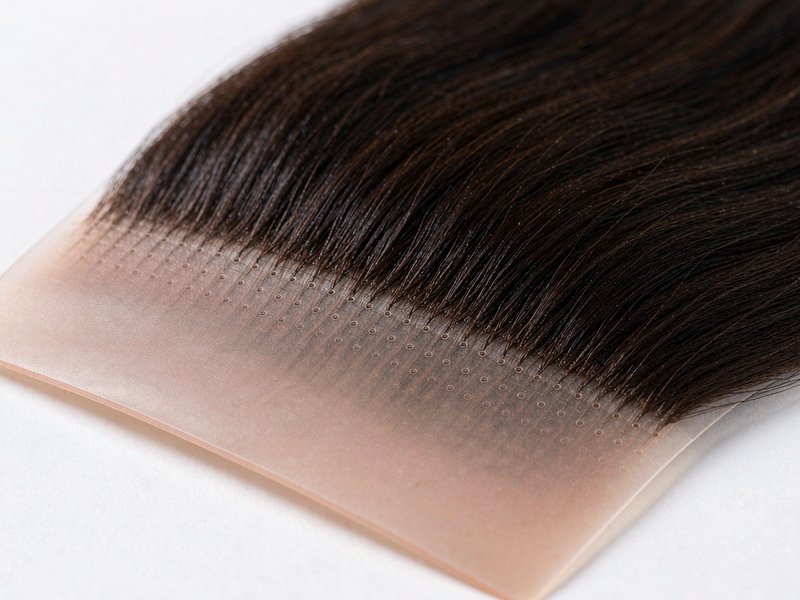
A genius weft is a hybrid construction: the body of the weft is hand-tied — strands knotted into a fine thread row for a soft, thin, flexible edge — and then reinforced along that edge with a micro-machine stitch that locks the knots in place.

That one extra step solves the two biggest weaknesses of classic hand-tied wefts:
- Hand-tied wefts cannot be cut. Cut one and the knots unravel down the row. Genius wefts can be cut anywhere because the reinforcement seals the edge.
- Hand-tied wefts shed when stressed. The reinforcing stitch dramatically reduces shedding at the base.
The result is a weft that lays flatter than a machine weft, behaves better under cutting than a hand-tied weft, and stays comfortable and invisible in fine hair. In our production, the finished edge measures roughly 0.5–1 mm — thin enough to disappear against the scalp in a half-up style, strong enough to survive 3–4 reinstallation cycles.
Genius Weft vs Hand-Tied vs Machine Weft vs Flat Weft
Professional buyers should be able to explain the differences in one breath:
| Feature | Machine Weft | Hand-Tied Weft | Flat Weft | Genius Weft |
|---|---|---|---|---|
| Construction | Fully machine-sewn on a reinforced seam | Fully hand-knotted on thread | Hair laminated between PU/fabric layers | Hand-tied body + micro-machine reinforced edge |
| Thickness | Bulky ridge (2–4 mm) | Very thin (~1 mm) | Thin (~1–1.5 mm) | Ultra-thin (0.5–1 mm) |
| Can be cut? | Yes, but edges may fray | No — unravels | No | Yes — cut anywhere |
| Return hairs | Common | Few but present | None | None in our construction |
| Shedding | Low | Moderate under stress | Low while bond holds | Minimal |
| Weight per row | Heavy | Light | Light-medium | Light |
| Best for | Volume on thick hair | Fine hair, premium installs | Medium hair | Fine hair + flexible customization |
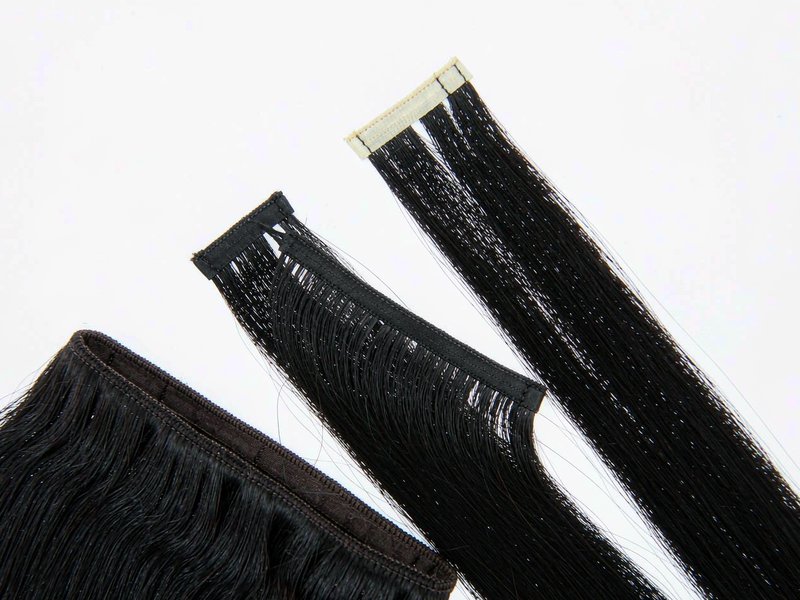
The honest summary: genius wefts sit at the top of the weft family because they take the best property of each sibling — hand-tied thinness, machine strength, flat-weft invisibility — and remove the worst limitations of each.
Why Salons Are Switching to Genius Wefts
From our order book, salons choose genius wefts for five reasons:
- They disappear on fine hair. The thin, soft edge lies flush against the braid or bead row, so clients with fine or thin-density hair can finally wear wefts without a visible ridge showing through.
- Flexible customization. Because the weft can be cut anywhere, stylists fit each row exactly to the client’s head shape — no folding, no bunching at the curve.
- Comfort clients notice. No stiff seam, no scratchy return hairs. Clients with sensitive scalps feel the difference on day one.
- Fewer callbacks. Reinforced edges and low shedding mean fewer “my weft is shedding/raveling” complaints between maintenance visits — the metric that quietly protects your salon’s margin.
- Premium positioning. Genius weft installs command higher service prices. Salons sell the method as an upgrade, and the product supports the story.
You can see the construction up close on our Невидимые расширения Genius Wefts product page, and on our Роскошные утки для волос Genius line.
Inside Everbeauting’s Genius Weft Production
Because “genius weft” is a category and not a standard, here is exactly how we build ours:
- Hair: 100% Remy human hair with cuticles aligned in one direction, double-drawn so short strands are removed and density stays consistent root to tip. Colors are dyed in-house for batch consistency.
- Knotting: Skilled workers hand-knot strands into the thread row — knot density is calibrated so the weft is full without becoming bulky.
- Reinforcement: A micro-machine stitch seals the hand-tied edge. This is the step that separates a true genius weft from a rebranded hand-tied weft — and it is where low-cost suppliers save money.
- QC per batch: Every batch passes strand-pull shedding tests, edge-stitch inspection, gram-weight verification (panels are weighed against the stated weight) and a 10-cycle wash check on retained samples.
- Packing: Sealed, residue-free packing so rows arrive install-ready.
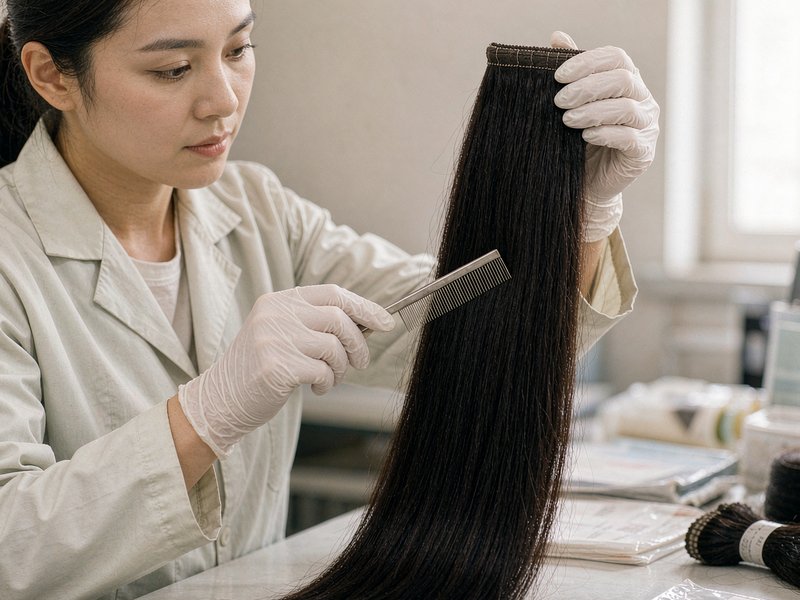
For salon chains and distributors, that batch discipline is the actual product you are buying: your client’s experience in month four must match their experience in week one. The same production discipline carries across our full Серия уток волос, including machine wefts and hand-tied lines.
Which Clients Are Genius Wefts Right For?
Genius wefts are not the answer for everyone — and saying so builds trust with your clients:
- Fine or thin hair: the ultra-flat edge is the main selling point; a machine weft would show through.
- Clients who wear their hair up: flat edges hide even in high ponytails and half-up styles.
- Clients needing custom coverage: cut-to-fit rows adapt to asymmetrical hairlines and shorter crowns.
- Sensitive scalps: no return hairs, no stiff seam.
- Not ideal for: clients who want maximum volume from minimal rows on very thick hair (machine wefts carry more grams per row for less money) — be honest about it and upsell the right product.
How Genius Wefts Are Installed
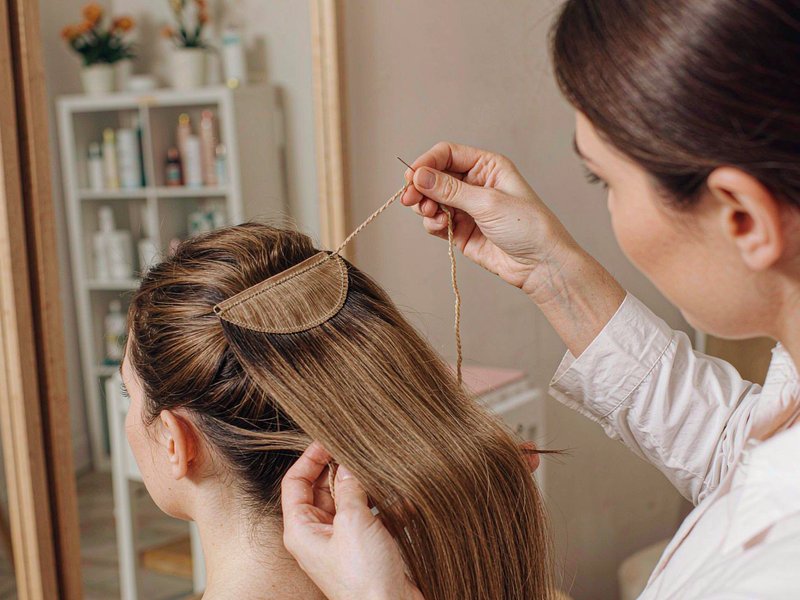
Stylists install genius wefts with the same two dominant methods as hand-tied wefts:
- Braid-and-sew: a discreet braid row is created at the occipital/crown area and the weft is sewn on with a curved needle. Flat edges make the braid easier to hide.
- Micro-bead / micro-link (no braid): silicone-lined beads clamp natural hair and weft together in rows — no braid, no glue, fully reusable, popular with clients who want a gentler method.
Because the weft can be cut, many stylists combine methods per zone: sewn rows for the back, bead rows around the temples where hair is finest. Tools matter here — silicone-lined beads, curved needles and thread should come from a consistent supplier; our weft installation tools category covers the full kit. Installation takes 1.5–2.5 hours depending on method and row count.
Lifespan, Maintenance and Reuse
With correct care, a well-made genius weft lasts 6–12 months and survives 3–4 reinstallation cycles:
- Move-up appointment: every 6–8 weeks as natural hair grows out (braid method) or 8–10 weeks (bead method).
- Washing: 2–3 times per week, sulfate-free shampoo, diluted and applied to the scalp, conditioner mid-length to ends only.
- Drying: never sleep on wet wefts — blot and blow-dry the base row on cool-to-warm.
- Brushing: soft bristle or loop brush, hold the base row, start from the ends.
- Heat: styling irons up to 180 °C on the mid-lengths and ends, never directly on the weft edge.
- At move-up: rows are removed, hair washed, and the weft reinstalled with fresh braid/beads — this is where the cut-anywhere strength pays off, because rows can be trimmed and re-fitted each cycle.
How to Evaluate Genius Weft Quality Before a Bulk Order
Ask every prospective supplier for these six things:
- A macro photo of the edge. You want to see the hand-tied knots and the reinforcing stitch. If a supplier cannot produce this photo, they are not making the product.
- A physical sample you can cut. Cut 2 cm off the end, wash it 10 times, tug gently over white paper. A true genius weft will not unravel and will not shed clouds.
- Gram-weight verification. Weigh a panel against the stated weight (e.g. 100 g, 125 g). Under-weight density is the oldest trick in the weft trade.
- Hair verification. Ask whether the hair is Remy with aligned cuticles and whether it is double-drawn. Non-Remy hair tangles by week six no matter how good the weft is.
- Return-hair check. Run your fingers along the inside of the weft against the grain — you should not feel short hairs sticking back.
- Written construction spec: knot density, edge thickness, thread and stitch type. If they cannot write it down, they do not control it.
For a deeper framework that applies to every extension category, our guide to choosing high-quality human hair covers the material side of the evaluation.
Wholesale and Private-Label Notes
For distributors and salon chains, here is what to specify when quoting genius wefts:
- Lengths: 12″–30″ (18″–24″ is the core volume range for most markets)
- Grams per panel: typically 100–150 g per pack; confirm per-panel weight in writing
- Colors: natural ring, ombre, balayage and piano tones — our Ombre Color Genius Wefts and Цвет фортепиано Genius Wefts pages show the colorwork
- MOQ & OEM: per-color MOQs, custom color matching from a swatch, private-label packaging and care cards
- Consistency clause: agree that color and gram weight are checked per batch — this is what protects your brand between orders
Conclusion
A genius weft is the best-of-all-worlds weft: hand-tied thinness and comfort, machine-weft strength, flat-weft invisibility, and cut-anywhere flexibility that no other construction offers. For salons, it opens up fine-hair clients and premium service pricing; for wholesalers, it is one of the fastest-growing premium categories in the market.
But remember that “genius weft” names a category, not a quality level. Two products with the same name can perform nothing alike. Vet the edge, the shedding, the grams and the hair — and when you compare suppliers, put a true reinforced-edge genius weft on the sample list. Once a stylist fits one on a fine-hair client, reorders tend to follow on their own.
About The Author
The Everbeauting Hair Extensions Team is the production team behind вечнокрасивый, a manufacturer of 100% Remy human hair extensions serving chain salons, wholesalers and distributors across Europe and North America. Our weft portfolio spans genius wefts, hand-tied, machine, flat and butterfly wefts, alongside injection tape-ins, keratin bond lines and hair toppers. Every production batch is verified for cuticle alignment, knot reinforcement, gram-weight accuracy and shedding before shipment. Better craft is not a feature — it is our whole business model.
Want samples of our genius weft lines, a custom color match, or a private-label program built on them? Contact the Everbeauting team for catalogs and wholesale quotations.
FAQ: 10 Most-Asked Questions About Genius Wefts
1. What is a genius weft?
A hybrid weft construction: hand-tied knots for a thin, flexible, comfortable edge, reinforced with a micro-machine stitch that locks the knots and allows the weft to be cut anywhere without unraveling.
2. What is the difference between a genius weft and a hand-tied weft?
A genius weft is essentially a reinforced hand-tied weft. The reinforcement lets you cut it to any length and dramatically reduces shedding — two things a classic hand-tied weft cannot offer.
3. Can a genius weft be cut?
Yes — anywhere along the weft, unlike a classic hand-tied weft. That is one of its defining advantages, allowing stylists to fit rows exactly to the client’s head.
4. Do genius wefts shed?
Any weft sheds a few strands, but a properly reinforced genius weft sheds minimally. Heavy shedding indicates weak knotting or missing edge reinforcement — test a sample over white paper before bulk ordering.
5. Are genius wefts good for fine or thin hair?
They are the best weft choice for fine hair. The 0.5–1 mm edge lies flush against the install and disappears, where a machine weft ridge would show through.
6. How long do genius wefts last?
6–12 months with correct care, surviving 3–4 reinstallation cycles. Lifespan depends on hair quality, install method and aftercare.
7. How are genius wefts installed?
Braid-and-sew or micro-bead (micro-link) rows — the same methods as hand-tied wefts. Because the weft is cuttable, many stylists combine both methods per zone.
8. How often do genius wefts need maintenance?
A move-up every 6–8 weeks (braid method) or 8–10 weeks (bead method) as natural hair grows. The weft is removed, washed and reinstalled with fresh rows.
9. Why do genius wefts from different suppliers perform so differently?
Because “genius weft” is a category, not a standard. Knot density, edge reinforcement, hair grade and QC discipline all vary between factories — always test a physical sample.
10. Does Everbeauting offer wholesale and private-label genius wefts?
Yes. Our genius weft lines are available wholesale with custom lengths, gram weights, color matching, packaging and private-label branding for salons, distributors and hair brands.
Related Reading From The Everbeauting Blog
- Everbeauting hair extensions blog — buying guides, care tips and product knowledge for professionals
- Butterfly Double Genius Weft Extensions vs. Genius Weft: Which Is Better?
- Can You Wear High Ponytails With Genius Weft Hair Extensions?
- Tape-Ins vs. Genius Wefts vs. K-Tips: Which “Invisible Blend” Is Right for Your Hair Type?
© Everbeauting Hair Extensions. This guide may be republished by our salon and distributor partners with attribution and a link back to this page.