

Yes — an oily scalp can make tape-in extensions slip faster. A hair extensions manufacturer explains why sebum breaks down tape adhesive, and the exact prevention routine salons and clients should follow.
Quick answer: Yes — an oily scalp does increase the risk of tape-in extensions slipping, because sebum is a natural oil that slowly breaks down the adhesive on the tape. But oily scalp does not disqualify clients from wearing tape-ins. With proper scalp preparation before installation, the right washing routine, correct product placement and a slightly shorter repositioning cycle (every 4–6 weeks instead of 8), clients with oily scalps can wear tape-ins just as successfully as anyone else.
If you run a salon, a distribution business or a private-label brand, this question comes up constantly from both stylists and end clients. This guide gives you the complete professional answer — the science of why it happens, how to prevent it, and how to turn “oily scalp” clients into long-term, repeat customers.

Why Does an Oily Scalp Make Tape-Ins Slip?
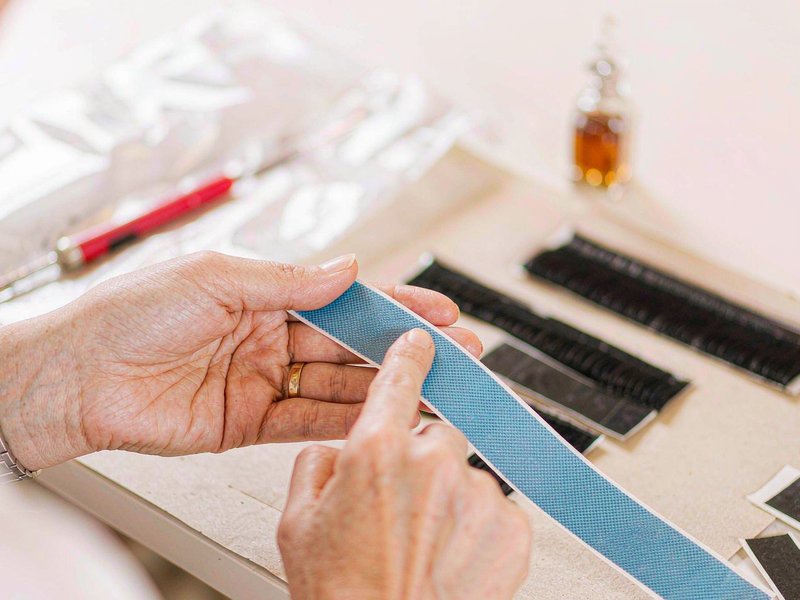
Tape-in extensions rely on a pressure-sensitive adhesive — typically a medical-grade acrylic or blue-liner tape — to hold the weft against a thin section of natural hair. The adhesive forms its strongest bond on clean, dry, product-free hair.
Sebum, the natural oil produced by the scalp’s sebaceous glands, works against that bond in three ways:
- It migrates. Sebum travels down the hair shaft from the scalp toward the roots — exactly where the tape sits. Within days of installation, an oily scalp can coat the hair inside the tape panel with a micro-layer of oil.
- It interferes with adhesion chemistry. Pressure-sensitive adhesives bond mechanically to the hair’s cuticle surface. Oil fills in the microscopic texture of the cuticle, so the adhesive grips a slippery film instead of the hair itself.
- It loosens over heat and humidity. Combined with shower heat, workouts and sleep friction, an oil-coated bond softens faster and begins to slide within 1–3 weeks instead of holding the standard 6–8 weeks.
The result: tape panels that “slide” down the hair shaft, wefts that peek out at the parting, or panels that fall out entirely during brushing.
The key point for professionals: slippage on oily scalps is a maintenance and installation protocol problem, not a reason to refuse the method. Salons that follow the routine below see almost the same wear time on oily-scalp clients as on dry-scalp clients.
What Slippage Actually Looks Like
Train your clients and junior stylists to recognize early signs:
- Tape panels visibly lower than where they were installed, especially around the hairline and crown
- Tape edges lifting or “fishing-line” gaps between the two tape panels
- Wefts sliding out easily when brushed with slight tension
- Oily residue visible on the tape panel when a slipped weft is removed
- Short regrowth hairs stuck in the tape instead of inside the sandwich
If a client reports slippage within the first 10–14 days, oil migration plus installation prep is almost always the cause — not the hair quality.
Who Is Most at Risk?
Screen clients at consultation. Highest risk profiles:
- Clients who wash daily because their hair looks oily by the next morning
- Clients who use oils, serums or heavy conditioners at the roots (hair-growth oils are a major culprit)
- Clients who sweat heavily — gym-goers, athletes, hot yoga
- Clients in hot, humid climates or those using sunbeds and saunas regularly
- Clients on hormonal treatments or medication that changes sebum production
For these clients, the answer is not “no tape-ins” — it is a modified protocol, which is exactly what the next section covers.
The 8-Step Prevention Routine for Oily Scalps
Give this protocol to every stylist installing on an oily-scalp client:
Step 1 — Clarifying wash 24 hours before installation (no later). Wash the client’s hair with a clarifying shampoo the day before — or the morning of — the installation. This strips sebum, silicone and styling residue so the adhesive bonds directly to the cuticle.
Step 2 — Zero products on installation day. No conditioner, no oil, no leave-in, no serum, no dry shampoo on the day of installation. Even “light” products leave films that weaken the initial bond.

Step 3 — Install on fully dry, cool hair. Blow-dry completely and let the scalp cool down after drying — heat leaves the scalp slightly damp with perspiration, which weakens the first hours of adhesion.
Step 4 — Place panels slightly further from the root. For oily scalps, position tape panels about 1 cm from the scalp instead of 0.5 cm. This puts the adhesive in a slightly drier zone and slows oil migration into the bond.
Step 5 — Use smaller panels with even tension. Oily hair is often fine hair. Smaller sandwiched sections create more adhesive-to-hair contact and reduce sliding.
Step 6 — Instruct the client: first wash after 48 hours. The adhesive reaches full strength after 24–48 hours. No washing, heavy sweating or steam during that window.
Step 7 — Wash 2–3 times per week with clarifying or oily-scalp shampoo. Counterintuitive but critical: oily scalps should wash slightly more often, not less. Sebum left to accumulate is what dissolves the tape. Use a sulfate-free clarifying shampoo, applied to the scalp with fingertips in downward strokes.
Step 8 — Keep all oils and conditioners below the tape line. Conditioner from mid-length to ends only. Hair-growth oils applied at night must stay off the tape zone entirely — the number one re-offender we hear about from salon partners.
Products to Use — and Products to Avoid
Use these
- Sulfate-free clarifying shampoo (2–3x per week)
- Lightweight conditioner — mid-lengths and ends only
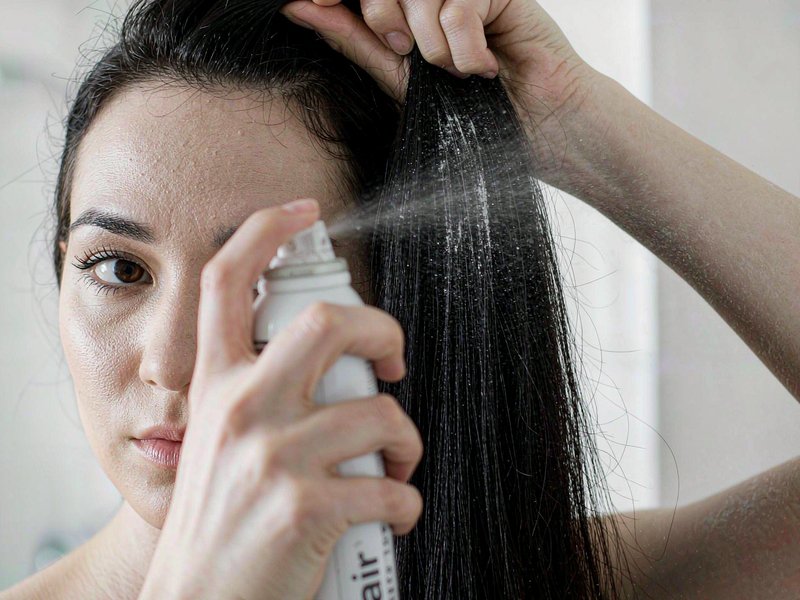
- Dry shampoo between washes — sprayed at the root, held at least 15 cm away, and sparingly on tape areas
- Oil-blotting routine: blotting papers or a soft towel pressed at the parting after workouts
- Tape-safe remover solution at repositioning — never oil-based “moisturizing” removers for oily clients, they leave residue
Never use on or near the tape zone
| Product / Ingredient | Why it’s a problem |
|---|---|
| Argan, coconut, castor and other hair oils | Directly dissolve the tape adhesive |
| Hair-growth oils applied at the root | Seep under the tape panels overnight |
| Heavy conditioners and masks at the root | Leave films that attract sebum |
| Alcohol-free “moisturizing” scalp serums | Often oil-based; migrate into the bond |
| Daily two-in-one shampoos with silicone | Buildup reduces adhesive grip |
| Dry shampoo sprayed directly onto tape panels | Clogs the adhesive edge and lifts it |
Adjusting the Maintenance Schedule for Oily Scalps
Standard tape-in wear is 6–8 weeks per installation. For oily scalps, shorten the cycle:
- Reposition every 4–6 weeks instead of 6–8
- Salon check at week 2 for high-risk clients — a quick 10-minute inspection catches lifting edges before they fail
- Clarify once weekly in addition to regular washes if the client works out daily
- Fresh tape at every repositioning — never re-use panels with old tape strips; adhesive that has absorbed sebum will not re-bond reliably
For distributors and salon chains: this shorter cycle actually increases annual revenue per client (more repositioning bookings), so it is a selling point, not a compromise.
Tape Quality Matters: The Manufacturer’s Perspective
From our factory floor, one more variable decides whether oily-scalp clients succeed: the adhesive itself.
Not all tape is equal. Cheap, no-name tape strips:
- Use adhesives with low shear strength that fail under oil exposure within days
- Leave sticky residue that stains wefts and frustrates removal
- Vary from batch to batch, so a salon’s results are inconsistent month to month
Professional-grade tape strips use medical-grade acrylic adhesive with high initial tack and high shear strength, tested for oil and sweat resistance. When we supply tape-in extensions to salon chains, we control:
- Adhesive lot consistency — the same tape specification across every production batch
- Tape dimensions (typically 4 cm x 0.8 cm) matched to weft width
- Weft cleanliness at shipment — panels are packed residue-free and sealed
For B2B buyers, this is the hidden quality marker to check when comparing suppliers: ask specifically what tape specification and adhesive grade they use, and request tape performance data — not just hair photos.
Salon-Side Best Practices for Oily Scalp Clients
- Add an oily-scalp question to your consultation form. One question — “how often do you wash your hair, and does it get oily within a day?” — identifies high-risk clients before installation.
- Sell an aftercare kit at installation. Include clarifying shampoo, dry shampoo and a printed care card. Salons that do this report noticeably fewer slippage complaints.
- Print the 48-hour rule on the card. Verbal instructions evaporate; printed ones do not.
- Pre-book the week-2 check and the week 4–6 repositioning at installation day. It protects the result and locks in the revenue.
- Log slippage incidents by tape batch. If one batch slips across multiple clients, contact your supplier — a consistent product should never behave inconsistently.
Troubleshooting: What to Do When Tape-Ins Still Slip
Slipping within 1 week, multiple panels: Recheck installation prep. The most common causes are skipped clarifying wash, products on installation day, or panels placed over oil residue. Remove, clean with tape remover solution and residue-free shampoo, re-clarify the hair, and re-install with fresh tape.
Slipping only around the hairline and crown: These zones have the most active sebaceous glands. Move panels slightly further from the root, and coach the client on blotting after workouts.
One panel keeps slipping while others hold: That panel may have been installed over a product residue patch. Re-install with fresh tape.
Tape leaves sticky residue on wefts during removal: The adhesive was likely low grade or overheated by hot water. Switch to a tested, medical-grade tape strip and use remover solution (never force).
Client’s scalp became itchier and oilier after installation: Buildup between the panels can irritate the scalp. Add a weekly clarify and make sure the client can reach the scalp between rows with a scalp brush — healthy scalp = longer-lasting extensions.
Conclusion
So — do tape-ins slip easily with an oily scalp? They can, if the installation and aftercare protocol ignores the oil. But with a clarifying wash before installation, disciplined product placement, a 2–3x weekly wash routine, and a shortened 4–6 week repositioning cycle, oily-scalp clients keep tape-ins in beautifully — and come back for more.
For salons and distributors, oily scalp is not a limitation. It is a segment that needs a better protocol and better tape — and the suppliers who provide both win the client for years.
About The Author
The Everbeauting Hair Extensions Team is the production team behind Everbeauting, a manufacturer of 100% Remy human hair extensions serving chain salons, wholesalers and distributors across Europe and North America. We specialize in tape-in, keratin bond (U-tip, I-tip, flat tip), weft, clip-in and topper products, with factory-direct quality control covering cuticle alignment, gram-weight accuracy, adhesive lot consistency and tape performance testing on every batch. This guide draws on installation feedback from professional partners worldwide — because when your clients get better results, your business grows.
Want wholesale catalogs, custom tape specifications or private-label aftercare kits for your salon brand? Contact the Everbeauting team today.
FAQ: 10 Most-Asked Questions About Tape-Ins and Oily Scalp
1. Do tape-in extensions slip more on oily scalps?
Yes. Sebum migrates into the tape zone and breaks down the adhesive, so oily scalps carry a higher slippage risk — but with proper scalp preparation, washing routine and a 4–6 week repositioning cycle, tape-ins hold well on oily scalps.
2. How do I prepare an oily scalp before tape-in installation?
Wash with a clarifying shampoo 24 hours before (or the morning of) installation, use absolutely no conditioner, oil or styling products on installation day, and install on fully dry, cool hair.
3. How often should I wash tape-in extensions with an oily scalp?
Two to three times per week with a sulfate-free clarifying shampoo, focusing on the scalp with downward fingertip strokes. Sebum accumulation is what dissolves the tape, so do not stretch washes.
4. Can I use dry shampoo with tape-in extensions?
Yes — it is one of the best tools for oily scalps. Spray at the root from at least 15 cm away, and avoid spraying directly onto the tape panels themselves.
5. Why do my tape-ins slip only at the hairline and crown?
The hairline and crown have the most active sebaceous glands. Panels there sit closest to fresh sebum. Move them slightly further from the root, blot after workouts, and clarify weekly.
6. How long do tape-ins last on an oily scalp?
Expect 4–6 weeks per installation instead of the standard 6–8. The hair itself still lasts 6–12 months of reuse with fresh tape at every repositioning.
7. Can hair-growth oils be used with tape-ins?
Only below the tape line — never at the roots. Growth oils applied at the scalp seep under the panels overnight and are the most common cause of sudden slippage we hear from salon partners.
8. Does sweat from workouts make tape-ins slip?
Sweat plus oil accelerates bond softening. Rinse or blot the scalp after heavy workouts, and braid the hair to reduce friction. Daily gym-goers should shorten their repositioning cycle.
9. What kind of tape works best for oily scalps?
Medical-grade acrylic adhesive tape strips with high shear strength and oil/sweat resistance. Cheap generic tapes fail within days on oily scalps — ask your supplier for the adhesive specification, not just the hair quality.
10. Should clients with oily scalps avoid tape-ins completely?
No. With the modified protocol in this guide — clarifying prep, correct product placement, 2–3x weekly washing and 4–6 week repositioning — oily-scalp clients are excellent long-term tape-in candidates.
Related Reading From The Everbeauting Blog
- Everbeauting hair extensions blog — buying guides, care tips and product knowledge for professionals
- How to Choose High-Quality Human Hair for Tape-In Hair Extensions
- How To Maintain Keratin Bond Hair Extensions To Extend Lifespan
© Everbeauting Hair Extensions. This guide may be republished by our salon and distributor partners with attribution and a link back to this page.