

What are butterfly weft hair extensions? Learn what makes them different, pros & cons, installation, care, and why stylists love this lightweight weft for thin hair.
Salon clients in 2026 all want the same four things: lightweight, invisible, no bulge, and no damage. Traditional hand-tied wefts deliver on invisibility but ask a lot in return — they are dense, they cannot be cut, sew-in installation is slow, and a heavy row pulls on fine scalps. That gap between what clients want and what classic wefts deliver is exactly why butterfly wefts appeared — and why they are becoming one of the fastest-growing weft requests in salons.
Butterfly weft is a lightweight, hole-punched human hair weft, also called PU hole weft, designed for no-sew or easy sew-in installation. In this guide we explain what it is, how the structure works, who it fits, how it installs, its honest pros and cons, how to care for it, and how it compares with hand-tied and genius wefts — from the perspective of the factory that manufactures all three.
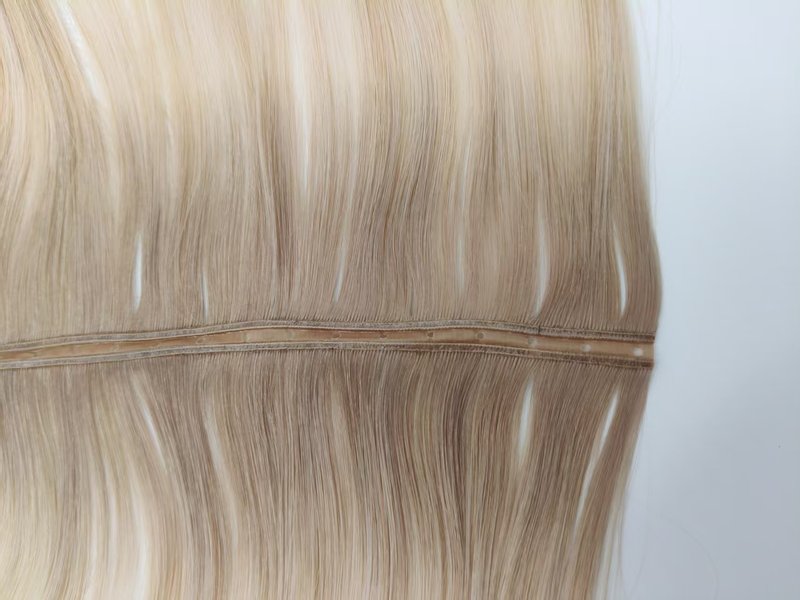
What Exactly Is Butterfly Weft Hair Extensions?
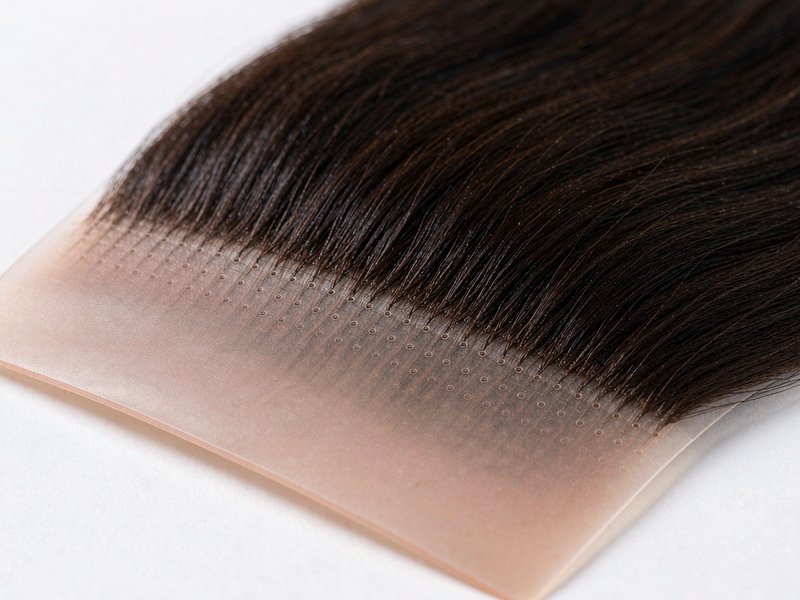
Butterfly weft is an improved weft construction: a thin band of 100% Remy human hair — cuticles aligned in one direction, heat-styleable and colorable — with a row of evenly punched holes (the “butterfly holes”) along a slim PU-reinforced base. The holes are the whole point: they let the stylist attach the weft with micro beads threaded straight through, or sew it in quickly, without dense hand-knotting or uncuttable rows.
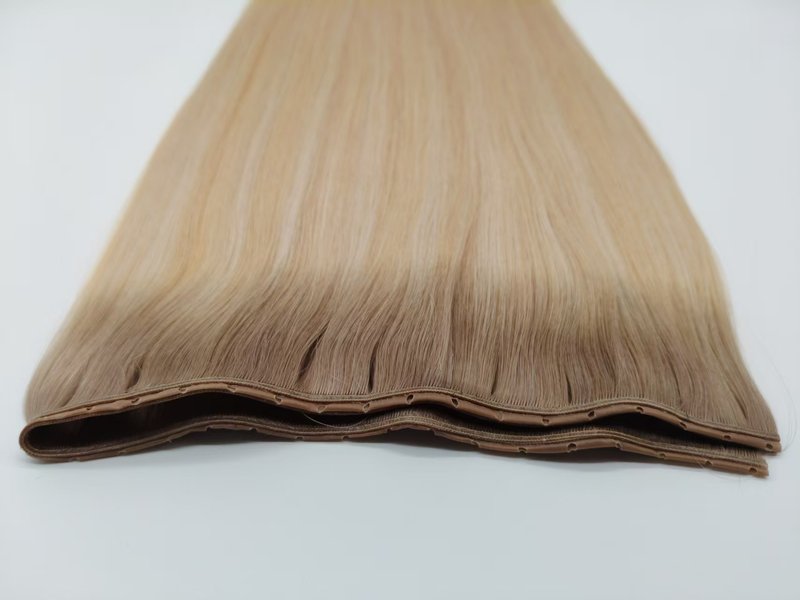
Why the name? The punched design lets the weft flex, bend and layer out in sections like butterfly wings — and each hole acts as an attachment point, so the weft distributes load along its whole length instead of one stitched seam.
What it is not: butterfly weft is not a hand-tied weft (no dense knot row), not a genius weft (no micro-machine reinforced solid edge), and not a tape-in (no adhesive). It is its own construction category — the closest cousin is our Butterfly Double Genius Weft line, which pairs the punched design with a doubled hair body.
Key Features of Butterfly Weft
- ✅ Lightweight — noticeably lighter than a traditional hand-tied weft of the same length, so less pull on the scalp through the day
- ✅ Invisible & flat — the slim PU-reinforced base sits flush against the head; no bulge in ponytails, buns or half-up styles
- ✅ Pre-punched holes — micro beads thread straight through the holes; no needle-and-thread knotting required for a no-sew install
- ✅ Flexible — it can be cut — cut between holes and the weft does not unravel or shed threads from the cut edge (the selling point stylists test first)
- ✅ Reusable — removed correctly at a move-up, the weft washes and reinstalls for multiple cycles
Who Is Butterfly Weft Best For?
Ideal clients:
- Thin or fine hair that cannot support a heavy, dense row
- Clients who want length plus density but fear heaviness, headaches or shedding
- Clients who wear high ponytails and buns regularly — the flat base hides in updos
Not ideal for:
- Very short hair (rows need enough natural length to attach and blend)
- Severely damaged or breaking hair — fix the canvas before adding weight
Butterfly Weft Installation Overview
Two mainstream methods, both faster than a full hand-tied install:
- Micro bead / micro link method (most common, no-sew): silicone-lined beads thread through the pre-punched holes and clamp onto natural hair. No braid, no thread, no sewing — many stylists report the fastest full install of any weft type they carry.
- Sew-in method: the weft can also be sewn onto a braid row for stylists who prefer traditional sew-ins — the punched base takes stitches easily.
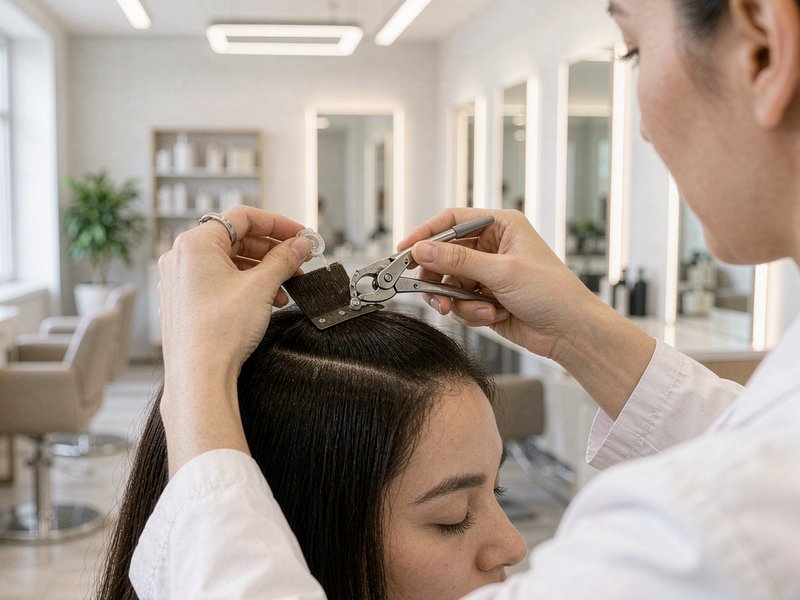
Installation essentials: section cleanly, keep tension snug but never tight, and re-check any row the client can feel pulling before they leave the chair. Compared with hand-tied, installs are faster and save real chair time — a big reason salons stock it. Silicone-lined beads, pliers and thread come from our weft installation tools range.
Pros and Cons of Butterfly Weft
Pros
- Ultra-light — less tension on natural hair through the day
- Flat, invisible finish even in updos
- Can be cut into smaller sections without unraveling
- Faster install time for stylists (no-sew bead method)
- Comfortable for all-day wear
Cons
- If a hole takes uneven load for a long period, some shedding near that hole can occur over time — correct placement prevents it
- Unit price is generally higher than a standard machine weft
- Still technique-sensitive: beads crimped too tight will stress natural hair with any weft type
Butterfly Weft vs Hand-Tied Weft vs Genius Weft
| Feature | Hand-Tied Weft | Genius Weft | Узор "Бабочка |
|---|---|---|---|
| Density | Densest, heavier row | Ultra-thin dense weave | Lightweight punched base |
| Edge | Knotted thread row | Micro-machine reinforced | PU-reinforced with holes |
| Can be cut? | No — unravels | Yes, anywhere | Yes — between holes |
| No-sew install? | No | Bead/sew | Yes — beads through holes |
| Install speed | Slowest | Fast | Fastest for most stylists |
| Price | Premium | Premium | Mid-to-premium |
The short version: hand-tied is the densest but must be sewn and cannot be cut — our Hand-Tied Hair Weft page shows the knot row; genius weft is the thinnest dense weave at a premium price; butterfly weft trades a little density for a punched, cuttable, no-sew-friendly base — the most flexible installation of the three at a balanced price. For a deeper dive on the other two, see our guides to genius wefts and genius vs hand-tied for fine hair.
Aftercare & Maintenance Tips
Pass these to every client at checkout:
- Washing: 2–3 times per week, sulfate-free shampoo, gentle at the rows — never scrub or rub the attachment area
- Sleeping: loose braid and a silk/satin pillowcase to prevent matting
- Reposition: every 6–8 weeks as natural hair grows; this is when the weft is washed, checked and re-fitted
- Heat: never aim a hot dryer or iron directly at the PU hole base; style mid-lengths and ends
- Pulling: no tight ponytails yanking at the same holes daily; vary attachment points
For the full routine, our guide on extending the lifespan of hair extensions covers washing, drying and storage in detail.
Buying Guide for Salon Owners
When sourcing butterfly wefts for your salon or brand:
- Hair first: insist on 100% Remy cuticle-intact human hair — non-Remy hair tangles by week six no matter how good the base is
- Customization: colors, lengths and textures (straight, body wave) should be orderable per your market
- Private label: custom packaging and branded care cards turn a weft into your salon’s own product line
- Sample first: always test a physical sample — hand feel, strand-pull strength at the holes, and whether a cut edge stays sealed
- Stock the method: butterfly wefts pair with micro bead kits; stock beads, pliers and thread so stylists never improvise
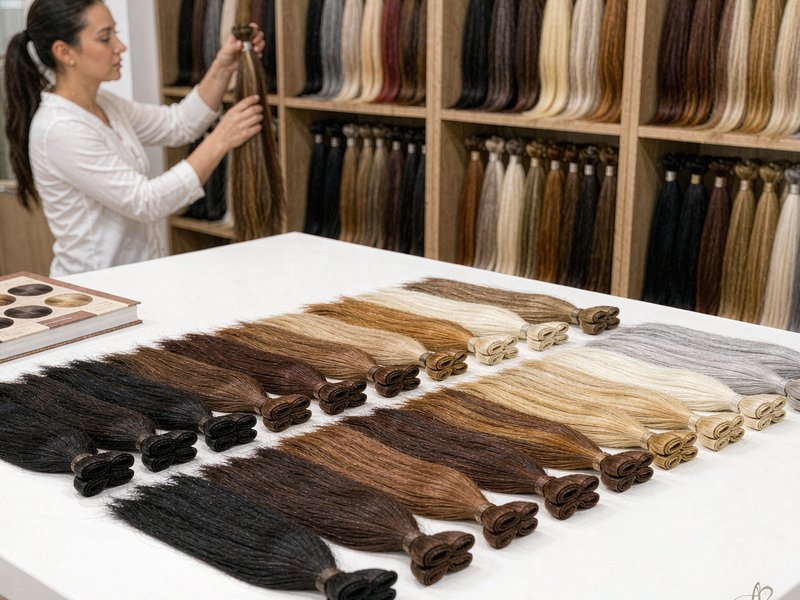
Our full Серия уток волос covers butterfly, genius, hand-tied and machine wefts. Our Butterfly Weft Hair Extensions Professional and New Butterfly Weft Hair Extensions Human Hair lines are available for wholesale and private label, with colorwork from natural blonde to balayage — see the Golden Blonde Butterfly Weft and Balayage Color Sorrento Butterfly Weft pages for the tones our salon partners reorder most.
Final Thoughts
Butterfly weft is one of the most talked-about salon weft solutions right now because it balances the three things clients actually feel: comfort, invisibility and install efficiency. For thin and fine-hair clients it is an easy product to recommend, and happy first installs are what drive the rebookings that make a weft line profitable.
One honest closing note from the factory floor: technique beats product. A butterfly weft installed with controlled tension and a sensible row count will protect natural hair through every cycle — the same rules that apply to every weft we manufacture. See also our comparison of butterfly double genius weft vs standard genius weft if you are deciding between the two punched constructions.
About The Author
The Everbeauting Hair Extensions Team is the production team behind вечнокрасивый, a manufacturer of 100% Remy human hair extensions serving chain salons, wholesalers and distributors across Europe and North America. We produce butterfly wefts, genius wefts, hand-tied and machine wefts, injection tape-ins and keratin bond lines, with every batch QC-checked for cuticle alignment, hole reinforcement, gram-weight accuracy and shedding. Private-label packaging and custom color matching are available across the weft range.
Want to test butterfly wefts on your own clients? Contact the Everbeauting team for sample packs, wholesale catalogs and private-label options.
FAQ: 10 Most-Asked Questions About Butterfly Wefts
Q1: Can butterfly weft be cut?
Yes — cut between the punched holes and the weft stays intact; the hole pattern and PU reinforcement stop the edge from unraveling. That is one of its core advantages over classic hand-tied wefts.
Q2: How long do butterfly weft extensions last?
6–12 months with correct care, surviving multiple reinstallation cycles at 6–8 week move-ups. Lifespan depends on hair quality, install technique and aftercare.
Q3: Are butterfly wefts good for fine hair?
Yes — they are one of the best weft choices for fine hair. The lightweight punched base carries less weight per row than dense hand-tied wefts, and the flat base hides on thin hair.
Q4: Can you reuse butterfly weft hair?
Yes. Removed correctly at a move-up, washed and conditioned, the weft reinstalls for several cycles. The punched holes remain usable row after row.
Q5: Is butterfly weft the same as genius weft?
No. Genius weft is a hand-tied body with a micro-machine reinforced solid edge; butterfly weft has a PU-reinforced base with pre-punched holes for no-sew bead installation. They are different constructions — see the comparison table above.
Q6: Do butterfly wefts need sewing?
Not necessarily. The most popular method is no-sew: micro beads thread straight through the pre-punched holes. Sewing is still possible for stylists who prefer it.
Q7: How many rows does a fine-hair client need?
Usually 2–4 rows depending on the target length and density. Butterfly wefts’ light base allows more rows without the heaviness that dense wefts would create on fine hair.
Q8: Can butterfly wefts damage natural hair?
Not by construction — damage comes from over-tight beads, too much weight or delayed repositioning, which is true of every weft type. Controlled tension and 6–8 week repositioning prevent it.
Q9: Can I dye or heat-style butterfly weft extensions?
Yes. Our butterfly wefts are made from 100% Remy cuticle-intact human hair, so they can be colored and heat-styled like natural hair — just keep high heat away from the PU hole base.
Q10: What colors and textures are available for wholesale?
Natural ring colors, blonde, ombre, balayage and piano tones, in straight and body wave, with custom color matching and private-label packaging for salons, distributors and hair brands.