

A hair extensions manufacturer separates fact from myth: which genius weft habits actually damage natural hair, which myths are false, and the aftercare routine that protects it.
Quick answer: A genius weft does not damage natural hair by itself. Damage comes from four controllable factors: too much tension at installation, too much weight per row, poor home aftercare, and stretching the move-up interval. A correctly installed, correctly weighted genius weft on healthy hair can be worn for years without measurable thinning. Most “wefts ruined my hair” stories trace back to one of those four factors — not to the weft construction. The myths that genius wefts are “heavier”, “harsher” or “pull hair out by design” are simply not supported by how the product is built.
We hear this question constantly, from salons defending their recommendation and from clients three weeks into an install who found a stray strand on the pillow. So let’s answer it properly, from the manufacturing side: what a genius weft physically does to natural hair, which myths deserve to die, and the aftercare routine that keeps natural hair healthy through every cycle.
How a Genius Weft Actually Interacts With Natural Hair
A genius weft is never glued, fused or clamped directly onto a strand of natural hair. It is attached one of two ways:
- Braid-and-sew: natural hair is braided into a thin, flat row, and the weft is sewn onto that braid
- Micro-bead: silicone-lined beads clamp a section of natural hair, and the weft is threaded through
In both methods, the load is distributed across hundreds of strands per row, not concentrated on a few. That distribution is what makes wefts the gentlest high-volume method in professional extensions — and it is also why the two failure points are identical in both methods: tension and weight.

The hair shaft itself is not chemically altered. No heat, no adhesive, no keratin bond. That is the structural reason a weft install is considered lower-risk than fusion or tape for fragile hair — there is no chemical or thermal insult to the cuticle.
Myth #1: “All Wefts Damage Your Hair”
False — but with a caveat worth understanding.
Wefts are the method least likely to cause traction damage when installed correctly, because load is spread across a wide row. Traction damage happens when force per strand exceeds what the follicle tolerates over time. Spread that force across 200 strands instead of 30, and each follicle carries a fraction of the load.
The caveat: “correctly” is doing a lot of work in that sentence. A weft installed too tight, or with too many rows for the density of natural hair, produces exactly the traction damage people blame on the product.
Myth #2: “Genius Wefts Are Heavier Than Hand-Tied”
False on a like-for-like basis. Genius and hand-tied wefts are both light constructions — typically in the same range per row at equal gram weight. What varies is density per centimeter: the genius weft’s reinforced edge holds slightly denser knotting, so you often need fewer rows to hit the same visual volume. Fewer rows means less total weight on the scalp, not more.
Where the myth comes from: comparing a genius weft row to a hand-tied row at different gram weights, or comparing either to a machine weft (which genuinely is heavy and bulky). Compare grams to grams and the difference disappears.
Myth #3: “Extensions Thin Your Hair Over Time”
Partly true, but not because of the weft — because of the schedule.
Two things happen when a move-up is delayed well past 8 weeks:
- The natural hair grows out, so the weft sits further from the scalp and swings with more leverage on the row
- Shed natural hair accumulates inside the row and cannot be brushed out normally; when the row is finally removed, that accumulated hair comes out in a clump — which clients read as “the extensions made my hair fall out”
That second point is the single most misunderstood phenomenon in the industry. The hair was already shed; it was trapped. In a well-run 6–8 week schedule, this does not build up.
Myth #4: “Braids and Beads Pull Hair Out”
Only when the tension is wrong — and it is measurable.
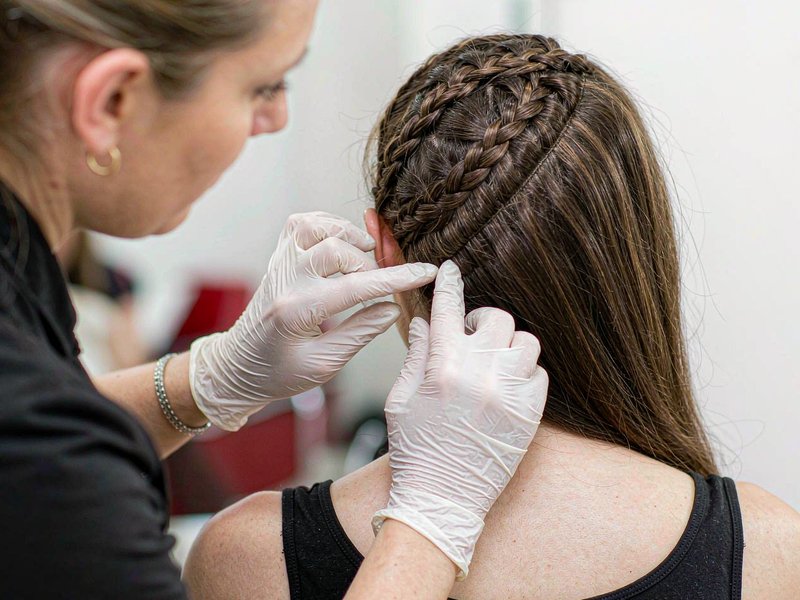
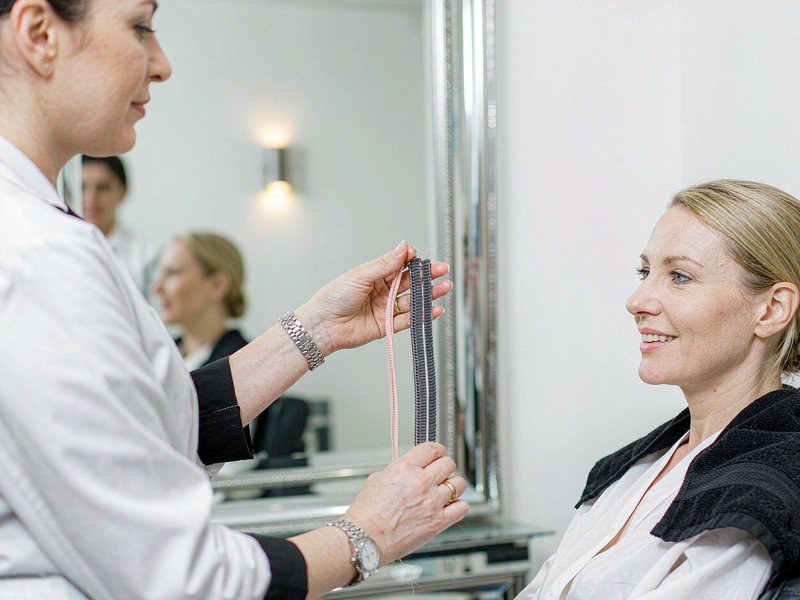
A correct braid row is snug, not tight. The test our partner salons use: after installation, the client should be able to frown, raise their eyebrows and tilt their head without feeling a pull at any row. If they can feel a specific point of tension, that row is too tight and should be re-done before the client leaves the chair — not at the next appointment.
Beads should be crimped to hold, never flattened. Over-crimped or too-small beads are the most common cause of localized traction damage in bead installs, and the fix costs seconds at install time. Silicone-lined beads and correct crimping tools matter here — our weft installation tools range covers the sizes used for fine-hair rows.
Myth #5: “You Can’t Wash Often or Oil Your Scalp”
False — a clean scalp is what protects the hair.
Sebum buildup and product residue at the row are far worse for scalp health than washing. The real rules are about method, not frequency:
- Wash 2–3 times per week with sulfate-free shampoo, diluted in an applicator bottle
- Cleanse the scalp between the rows, using fingertips — not nails, not a brush
- Rinse thoroughly; residue left at the braid is what causes odor and irritation
- Condition mid-lengths and ends only, never the row
Scalp oils and serums are fine if applied between rows and kept off the attachment. What you should avoid is heavy oil massaged directly into a braid row, where it cannot rinse out cleanly.
Myth #6: “Genius Wefts Suit Everyone”
False — and this is where honest professionals earn trust.
Wefts are not appropriate for every scalp condition. Be cautious, and refer to a trichologist or dermatologist where relevant, if the client has:
- Active scalp inflammation, psoriasis flares or open lesions
- Recent chemotherapy or active medical hair loss under treatment
- Very fragile hair from recent chemical damage (bleach overlap, relaxer)
- Density so low that the required row count cannot be supported
A weft is a tool, not a cure. Recommending the wrong tool on a compromised scalp is what generates the horror stories — and it damages your reputation more than the client’s hair.
The 4 Real Causes of Damage (and How to Prevent Them)
| Real cause | What it looks like | Prevention |
|---|---|---|
| Tension | Sore spots, headaches on day one, redness at a row | Tension test before the client leaves; re-do the row if they feel a pull |
| Weight | Row count too high for natural density; row sagging | Match grams to density — fewer, denser rows beat many thin ones |
| Aftercare | Matting, buildup at the braid, breakage when brushing dry | Hold the root, brush from ends, never brush wet at the row |
| Schedule | Move-up stretched beyond 8–10 weeks | Book the move-up at install; treat it as part of the service |
Notice that none of these are product defects. That is the honest answer to “can a genius weft damage natural hair”: the construction is not the risk — the installation and the calendar are.
Aftercare Guide: Daily, Weekly and Move-Up
Week 1 (the critical window)
- Sleep with hair in a loose low braid or ponytail on a silk/satin pillowcase
- No tight updos, no high ponytails, no swimming
- Expect mild tightness for 24–48 hours; sharp pain is not normal — call the salon

Daily
- Brush twice a day with a soft bristle or loop brush: hold the row with one hand, brush from the ends upward
- Never brush hair that is wet at the row — blot, then air-dry or blow-dry the row on cool
- Loose braid for bed; silk pillowcase reduces friction
- No conditioner, oil or serum directly on the attachment

Weekly
- Wash 2–3 times, sulfate-free, scalp focused, rows kept clean
- Deep condition mid-lengths and ends only, once a week
- Check each row visually for slippage, looseness or odor
- Avoid chlorinated pools; if unavoidable, rinse immediately after
Move-Up (every 6–8 weeks braid, 8–10 weeks bead)
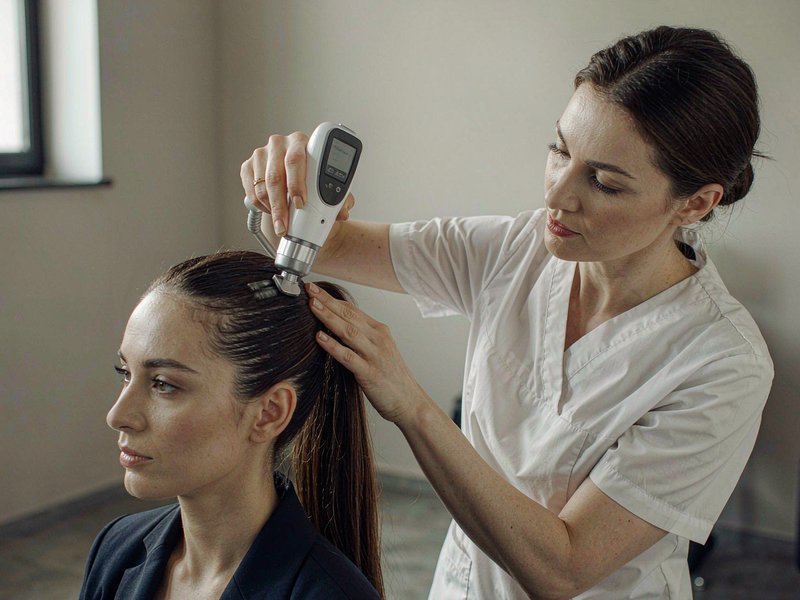
- Rows removed, natural hair washed and detangled fully
- Scalp inspected for redness, tenderness or thinning at the row line
- Weft washed, conditioned and inspected — this is where reuse cycles are earned
- Rows re-fitted with fresh braid or beads; row placement rotated slightly to avoid repeated stress on the same strands
Red Flags: When to Remove Early
Remove the install before the scheduled move-up if any of these appear:
- Persistent pain, headaches or open sores at a row
- A row that slips more than a few millimeters within days of install
- Noticeable thinning or a bald patch along the row line
- Odor or persistent itching that does not resolve after a proper wash
- Visible mold or mildew smell in the weft (usually from sleeping on wet hair)
None of these are “wait and see” situations. A weft removed early is a customer retained; a weft left too long is a review you cannot delete.
Conclusion
Can a genius weft damage natural hair? Not by design, and not by construction. Genius wefts distribute load across hundreds of strands per row, involve no heat, glue or chemicals on the hair shaft, and — thanks to the reinforced edge — let stylists fit fewer, better-placed rows instead of many bulky ones. What actually damages hair is tension that is too high, weight that is too much, aftercare that is too casual, and move-ups that are too late. All four are controllable.
For salons, that is a genuine sales message: sell the method and the schedule, not just the hair. For buyers sourcing wefts, it is the reminder that the safest product is the one whose edge is thin, consistent and honestly specified — which is exactly what we build, and what our genius weft guide documents in detail.
About The Author
The Everbeauting Hair Extensions Team is the production team behind вечнокрасивый, a manufacturer of 100% Remy human hair extensions serving chain salons, wholesalers and distributors across Europe and North America. Our weft lines include genius wefts, hand-tied, machine and flat wefts, alongside injection tape-ins and keratin bond systems. We QC every batch for edge thickness, knot density, gram-weight accuracy and shedding, and we advise salon partners on row counts and move-up schedules because correct installation is what protects the client’s natural hair — and our product’s reputation.
Need help choosing row counts for fragile-hair clients, or want sample packs to test tension and weight on your own clientele? Contact the Everbeauting team for wholesale catalogs, specification sheets and private-label options.
FAQ: 10 Most-Asked Questions
1. Can genius wefts damage natural hair?
Not by construction. Damage comes from too-tight tension, too much weight per row, poor aftercare or a delayed move-up. A correctly installed genius weft on healthy hair can be worn for years without measurable thinning.
2. Are genius wefts heavier than hand-tied wefts?
No, not at equal gram weight. Both are light constructions. Genius wefts often need fewer rows to achieve the same volume, which means less total weight on the scalp.
3. Do hair extensions cause hair loss?
Extensions do not cause hair loss, but they can cause traction damage if tension is excessive or installs are left too long. Shed hair trapped in a delayed move-up can look like sudden hair loss when the row is removed.
4. Why does more hair seem to come out when extensions are removed?
That hair was already shed naturally but stayed trapped inside the row because it could not be brushed out. It is normal at a move-up, not a sign of new damage.
5. How tight should a weft row feel?
Snug, never tight. The client should be able to frown, raise eyebrows and tilt their head without feeling a pull at any row. If they can point to a spot of tension, the row should be re-done.
6. Can I oil my scalp with wefts installed?
Yes, if applied between the rows and kept off the attachment. Avoid massaging heavy oils directly into a braid row, where they cannot rinse out and can cause buildup.
7. How often should I wash my hair with wefts?
2–3 times per week with sulfate-free shampoo. A clean scalp is healthier than a sebum-buildup scalp — the key is method, not frequency: diluted shampoo, fingertips, thorough rinse.
8. What is the safest weft type for fragile hair?
A thin, lightweight weft installed with low tension and a conservative row count — typically a гениальный узор or a fine hand-tied weft. Fragile hair also needs a shorter move-up interval (4–6 weeks) and lighter total grams.
9. Can I sleep with wet hair extensions?
No. Sleeping on wet wefts traps moisture at the row, which can cause odor, mildew and matting, and weakens the braid. Blot and dry the row before bed.
10. How do I know if my install is too tight?
Pain, headaches, redness or sores at a row, or a feeling of pulling when you move your face or neck. Any of these means the row should be adjusted — do not wait for the scheduled move-up.