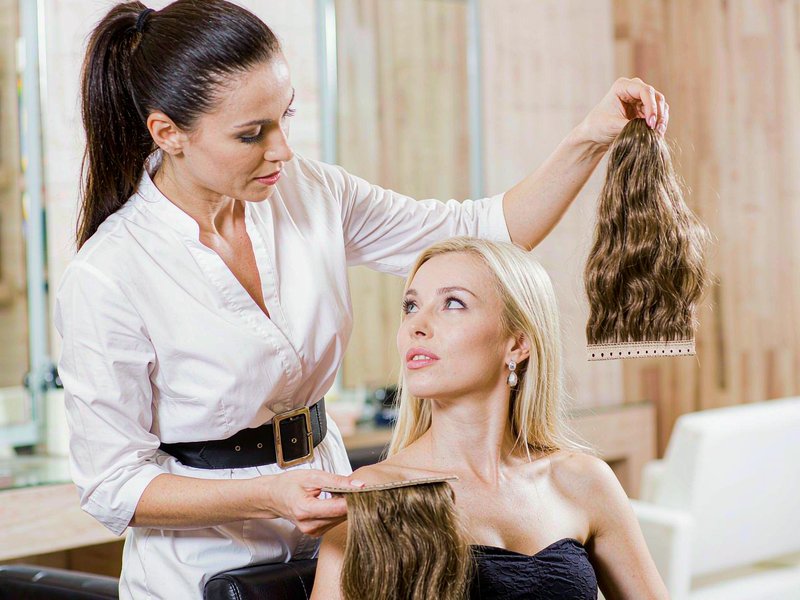


Quick answer: An invisible PU hole weft — better known in the trade as a butterfly weft — is a weft built on a thin, scalp-colored polyurethane (PU) base with evenly punched holes. The translucent base melts into the part line, hair returns inside the weft leave no scratchy ends, and the holes let stylists install with micro beads in a fraction of normal chair time. Made from 100% Remy human hair, a quality PU hole weft lasts 6–8 weeks per install and 2–3 reuse cycles. Below, a factory that manufactures them daily explains the construction, specs, installation, aftercare and what to check before buying wholesale.

1. Introduction: One Weft, Three Names
Search any salon supply forum and you’ll find the same product described three ways: butterfly weft, PU hole weft, and невидимый уток. They all point to one construction: a lightweight human hair weft on a thin polyurethane base with pre-punched attachment holes.
The naming matters for buyers, though. “Butterfly weft” describes how it moves; “PU hole weft” describes how it’s built; “invisible” describes what clients actually care about — a root line nobody can see. This guide covers all three angles: what the construction really is, what specifications matter, how it installs, how long it lasts, and how to judge quality before you commit to a wholesale order.
2. What Is an Invisible PU Hole Weft?
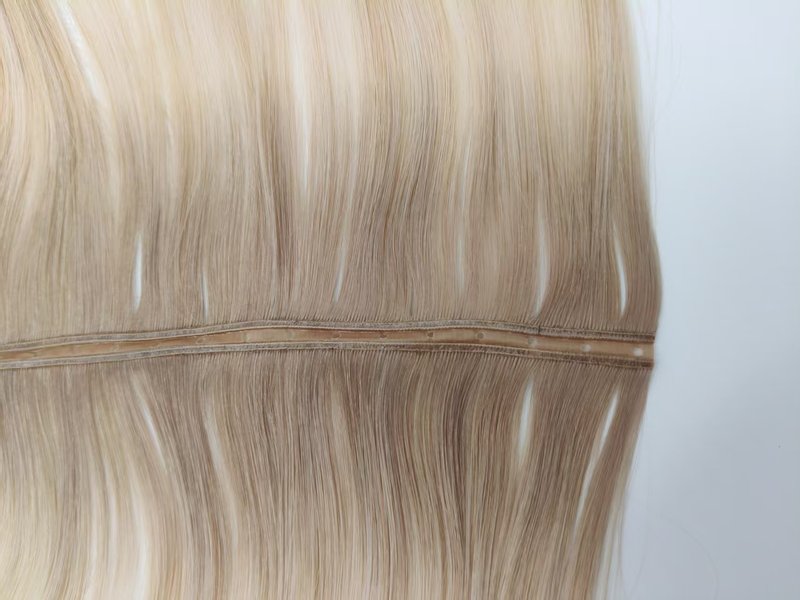
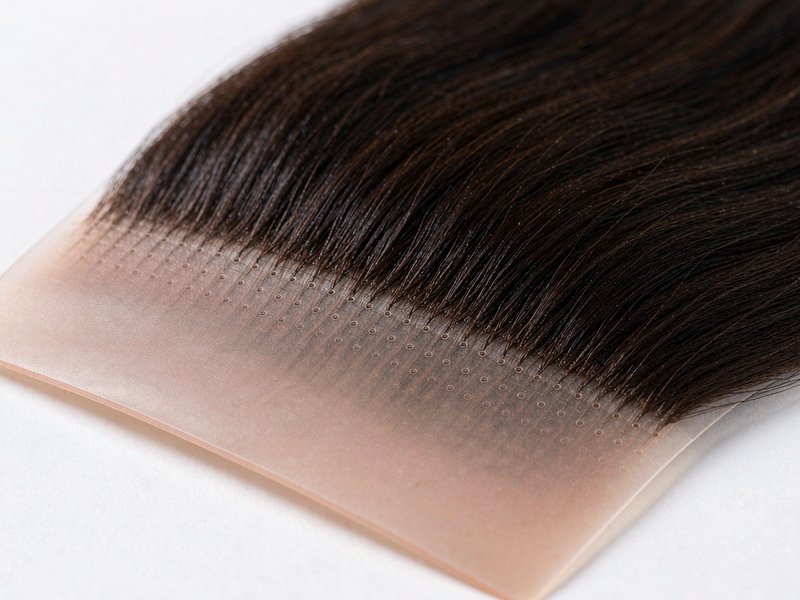
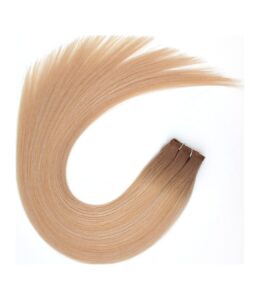
A PU hole weft is human hair anchored into a thin, flexible polyurethane strip — the same skin-friendly material used in tape-in tabs and skin tops — with a row of precisely punched round holes running along its length.
Each hole is an attachment point. A stylist threads a silicone-lined micro bead through the hole together with a section of the client’s natural hair, then clamps it flat. No sewing, no thread, no knots — which is why the method is called no-sew installation.
The name “butterfly weft” comes from behavior, not looks: because the PU strip is thin and the holes create flexible points, the weft bends and layers against the head’s curves like wings — it never sits as a rigid shelf the way a thick machine weft does.
3. The Anatomy of an Invisible PU Hole Weft
Four components decide whether a PU hole weft feels premium or cheap:
- The PU base (0.8–1.2 mm): a translucent, skin-toned strip. Premium bases use medical-grade polyurethane that stays soft through months of washing instead of turning brittle.
- The punched holes: evenly spaced, cleanly cut, deburred. Rough hole edges are the number-one cause of shedding at the attachment point.
- The hair anchoring: strands are secured through the base so hair returns inside the weft — no return hairs sticking out to scratch the scalp.
- The edge seal: a reinforced finish along the top and bottom edge that locks strands in and allows limited cutting without unraveling.
When we say the weft is “invisible,” these four details are what make it true — or false. A thick base, ragged holes, or loose anchoring will announce themselves within weeks.
4. Why It’s Called “Invisible”: Four Real Reasons
- The base disappears against the scalp. A translucent PU strip is 0.8–1.2 mm thin — compared with 5–8 mm for a machine weft — and it sits flush, so part lines show hair, not rows.
- No return hairs. Standard wefts fold hair over a cord, leaving short ends pointing back at the scalp. PU hole wefts return the hair inside, so the underside feels smooth.
- No sewing bumps. Bead-through-hole attachment clamps flat; there is no stitched ridge to poke through fine hair.
- Strategic hole placement. Rows sit below the occipital bone and behind the ear line, where even short-layered clients keep them hidden.
5. PU Hole Weft vs Other Weft Types
| Type | Base | Thickness | Cuttable? | Install | Best for |
|---|---|---|---|---|---|
| Machine weft | Reinforced cord | 5–8 mm | No | Sew-in | Thick hair, budget installs |
| Hand-tied weft | Hand-knotted thread | 2–3 mm | No | Sew-in | Fine hair, traditionalists |
| Genius weft | Hybrid weave | 3–4 mm | Anywhere | Sew-in / beads | Max invisibility + volume |
| PU hole weft (butterfly) | Punched PU strip | 0.8–1.2 mm | Yes, between holes | Micro beads (no-sew) | Fine hair, fast services |
| Tape-in | PU tab per strand | — | — | Tape panels | Quick volume, fine hair |
The PU hole weft’s unique position: it’s the thinnest base available and the only one designed for tool-free sewing. If you want a deeper construction comparison, read our butterfly weft vs genius weft breakdown — the two are siblings, not rivals.
6. What “Human Hair” Must Mean on the Label
“Human hair extensions” is a phrase the industry uses loosely. For a PU hole weft to justify its price, the hair should be:
- 100% Remy human hair — every strand aligned root-to-tip so cuticles point one direction; this is what prevents matting after three washes
- Cuticle-intact (virgin or close to it) — acid-washed, silicone-coated non-Remy hair looks great in the pack and tangles in a month
- Double-drawn — short strands removed by hand so the weft is full from top to ends
- Never blended — no synthetic fiber, no animal hair, no “human hair blend” fine print
This is non-negotiable at our factory: every batch is verified fiber-free before it enters the PU line, because one contaminated batch costs a salon account its trust.
7. Specifications at a Glance
| Spec | Typical Range | Notes |
|---|---|---|
| Pack weight | 50 g / 100 g | 100 g covers a fine-to-medium full head |
| Weft width | Approx. 100–120 cm per pack | Cut between holes to fit rows |
| Base thickness | 0.8–1.2 mm | Thinner = more invisible, needs cleaner punching |
| Hole spacing | Approx. 1–1.5 cm | Even spacing = even tension |
| Lengths | 14–24 inch | 18–22 inch are salon bestsellers |
| Textures | Straight, body wave | Deep wave by custom order |
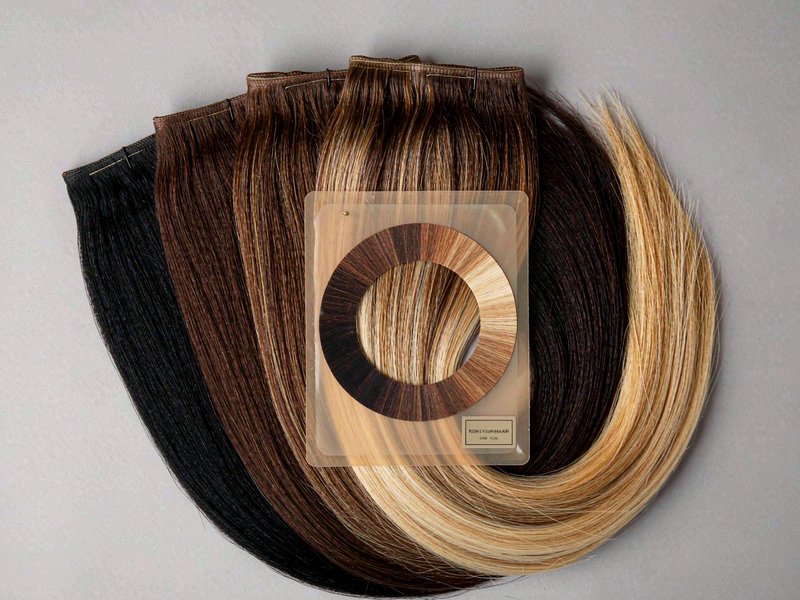
| Colors | Natural black to #60 blonde, balayage, piano | See the golden blonde and balayage Sorrento shades |
Exact specifications are customizable — hole spacing, base tint, and pack weight can all be adjusted for private label orders.
8. How to Install: The Micro-Bead No-Sew Method
- Create a clean horizontal part where the row will sit — typically 2–4 rows for a full head.
- Take a small section of the client’s natural hair (about the width of one hole spacing).
- Thread a silicone-lined micro bead onto the section with a hook tool.
- Slide the weft hole up against the bead so the PU strip sits flush under it.
- Clamp the bead flat with pliers — firm enough to hold, gentle enough to protect the hair.
- Repeat hole by hole along the row. A full head takes roughly 60–90 minutes — about 40% faster than a sew-in.
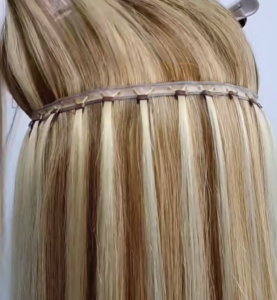
Prefer sewing? The holes don’t prevent it. Many stylists sew through the spaces between holes for maximum hold, or use a hybrid: beads for speed, thread where the row needs reinforcement. In both methods, run the “eyebrow test” before the client leaves — she should raise her eyebrows with zero pulling.
9. Aftercare: The Routine We Print on Every Care Card
- Washing: 2–3 times per week, sulfate-free shampoo, diluted and applied to the scalp — lather downward, never scrunch the base
- Brushing: twice daily with a loop brush, starting at the ends, holding the root with the other hand
- Sleeping: loose low braid plus a silk or satin pillowcase
- Heat: styling tools are fine on the mid-lengths and ends, but keep plates and dryers away from the PU base — direct high heat degrades polyurethane
- Products: avoid oil-heavy serums at the root line; oils migrate into the bead and PU strip and cause slipping
- Move-ups: every 6–8 weeks as natural hair grows out — the same wefts are re-beaded and reused
Give this list to clients verbatim; it’s the same aftercare logic we recommend for all flat wefts in our guide to preventing weft damage.
10. Lifespan and Reuse Cycles
| Stage | Expected Performance |
|---|---|
| Wear per install | 6–8 weeks before a move-up |
| Reuse cycles | 2–3 times with proper care |
| Total service life | 4–6 months of active wear |
| Most common failure cause | Beads clamped on rough hole edges (manufacturing defect) or skipped move-ups (maintenance) |
Notice that both failure causes are controllable — one at the factory gate, one at the salon. That’s why supplier choice and client education matter more than the weft category itself.
11. Pros and Cons for Stylists
Pros
- ✅ Thinnest base on the market — truly invisible part lines
- ✅ Fastest weft installation — no sewing, 60–90 minutes for a full head
- ✅ Lightest tension — ideal for fine, fragile, or postpartum hair
- ✅ Cuttable between holes for custom row planning
- ✅ No return hairs — comfortable from day one
Cons
- ❌ Holes demand precise bead placement — training matters
- ❌ Lighter density than a genius weft; volume seekers may need extra rows
- ❌ PU base must stay away from direct high heat
- ❌ Priced above machine wefts (below genius wefts)
12. Who Is It Best For?
- Clients with fine or thin hair who want length without weight — the flat PU base disappears even under straight, fine hair
- Salons selling time — junior stylists can be trained on no-sew installation in a day
- Clients upgrading from tape-ins — same flat comfort, but reusable rows instead of adhesive
- Not ideal for: very short hair (under 10 cm of natural length gives beads nothing to grip) or severely broken hairlines at the nape
13. How Everbeauting Manufactures Its PU Hole Wefts
We build butterfly weft human hair extensions on a dedicated line, and craft control starts before the PU stage — our injection and weft craft standards apply here too:
- Hair prep: Remy cuticle-aligned hair, hand-sorted and double-drawn
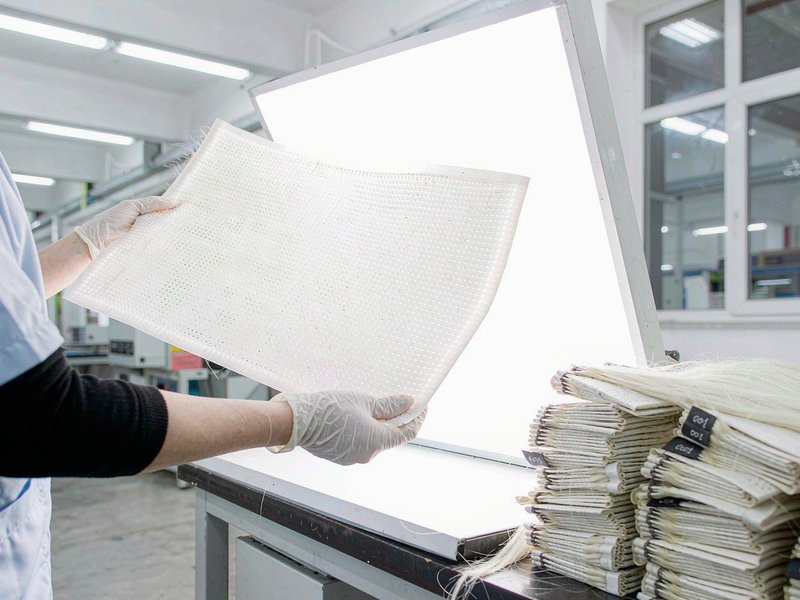
- Hole punching: precision dies with deburred edges — every hole is inspected under magnification, because a rough edge sheds hair within weeks
- Anchoring: strands are locked through the base and the edge is sealed, then pull-tested at the attachment points
- Batch QC: 10x wash tests, white-paper shedding tests, and colorfastness checks on every production lot — sample quality must equal bulk quality
14. Buying Guide for Salons and Wholesalers
Before you commit to a PU hole weft supplier, run these five checks:
- Ask for hair grade in writing — Remy, cuticle-aligned, zero fiber blending
- Pull-test a sample at the holes — grip the hair next to two holes and tug firmly; strands should not slip
- Cut-test — trim between two holes; a weft that unravels from the cut fails
- Check the base flexibility — bend it double; brittle PU cracks within a month of washing
- Confirm private label capability — packaging, logo tags, custom hole spacing and MOQ before the first bulk order
The full hair weft series catalog covers every base type we produce. For samples and current wholesale pricing, contact the Everbeauting team — low-MOQ sample orders ship worldwide.
15. Conclusion
An invisible PU hole weft is the most installer-friendly construction in the weft family: a scalp-translucent base under 1.2 mm, punched holes that turn installation into a fast bead workflow, and Remy human hair anchored without a single return hair. For stylists it means faster chairs and happier fine-hair clients; for wholesalers it means a product that survives 2–3 reuse cycles and earns repeat orders.
The deciding factor isn’t the category — it’s the craft. Hole edges, base quality, and hair anchoring separate a weft that disappears for six months from one that sheds in six weeks. Buy from a factory that tests every batch, and the invisible weft lives up to its name.
16. About The Author
This guide is written by Celine, representing Красота для волос — a professional human hair extensions manufacturer and exporter serving salon chains, wholesalers, and distributors across Europe and North America. Everbeauting manufactures butterfly (PU hole) wefts, genius wefts, injection tape-ins, and keratin bond extensions in-house, with strict QC on every batch and full private label support. Sample quality always equals bulk quality — request a sample kit and judge for yourself.
17. 10 Most-Asked Questions
Q1: What is an invisible PU hole weft?
A human hair weft built on a thin, scalp-translucent polyurethane base with evenly punched holes. Stylists attach it with micro beads threaded through the holes — no sewing required — which is why it installs faster and lies flatter than traditional wefts.
Q2: Is a PU hole weft the same as a butterfly weft?
Yes — two names for the same construction. “Butterfly” describes the way the flexible weft layers like wings; “PU hole weft” describes the material and the holes. Some sellers also call it an invisible weft.
Q3: Is the PU base noticeable in the hair?
Not when installed correctly. The base is 0.8–1.2 mm thin and translucent, sits flush under a micro bead, and hides inside the part line — even under fine, straight hair.
Q4: Can PU hole wefts be cut?
Yes — cut between holes and the edge holds without unraveling. Cutting is a standard part of row planning; avoid cutting through a hole itself.
Q5: How long do they last?
6–8 weeks per install and 2–3 reuse cycles with proper care — roughly 4–6 months of active wear per weft. Timely move-ups and root-safe product habits make the biggest difference.
Q6: Are they really 100% human hair?
At Everbeauting, yes — 100% Remy, cuticle-aligned human hair, double-drawn and never blended with synthetic or animal fiber. Always get the hair grade confirmed in writing when sourcing elsewhere.
Q7: How are they installed?
The standard method is no-sew: a hook pulls the client’s natural hair through a silicone-lined micro bead, the weft hole seats against the bead, and pliers clamp it flat. Sewing through the spaces between holes is also common.
Q8: Can PU hole wefts be reused?
Yes — 2–3 cycles. At each move-up the beads are opened, the weft is cleaned and re-conditioned, and a fresh row is installed higher up as natural hair grows.
Q9: PU hole weft vs genius weft — which should I buy?
Choose PU hole wefts for speed, lightness, and fine-hair comfort; choose genius wefts for maximum density and the very flattest sew-in edge. Many salons stock both — our full comparison covers the trade-offs.
Q10: Can I order custom colors and private label?
Yes. Everbeauting offers custom color matching, hole spacing, base tint and pack weight, plus private label packaging and low MOQs. Sample orders are available before any bulk commitment.
Related Reading From The Everbeauting Blog
- Everbeauting hair extensions blog — sourcing guides, salon tips, and product knowledge for professionals
- What Are Butterfly Weft Hair Extensions? A Complete Salon Guide
- Butterfly Weft vs Genius Weft: Differences, Pros & Cons for Stylists
- Butterfly Double Genius Weft Extensions vs. Genius Weft: Which Is Better?
- Why Craft Matters When Buying Hair Extensions?