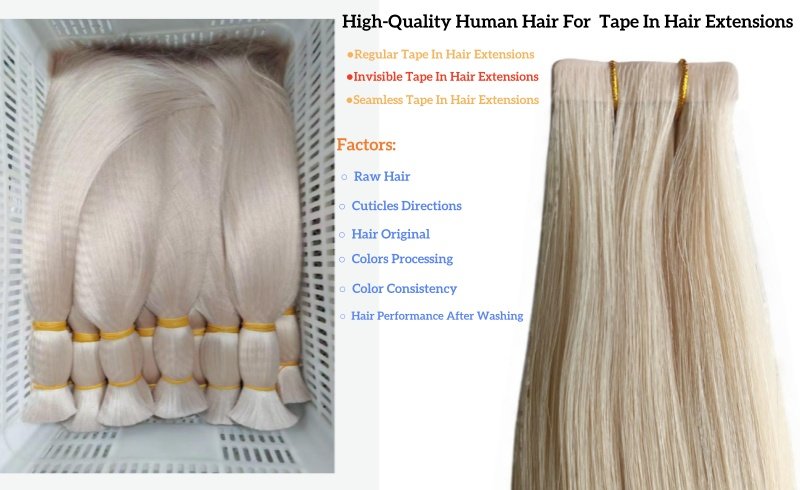


Hair quality is only half the story — craft decides whether extensions shed, flatten and last. A hair extensions manufacturer explains every craft type, and why our injection craft changes the game.
Quick answer: Craft is how the hair is assembled into a finished product — and it matters just as much as hair quality. Two sets made of identical Remy hair can perform completely differently: a poorly crafted weft sheds, bulks up and dries out within weeks, while a precisely crafted one stays flat, comfortable and reusable for 6–12 months. For professional buyers, craft determines shedding rate, comfort, invisibility, durability and batch consistency — which is why at Everbeauting we consider our injection craft (hair injected strand-by-strand into a thin PU skin base) the single biggest quality differentiator in our tape-in, weft and topper lines.
Most buying guides talk endlessly about hair origin, cuticle alignment and color. Those matter — but they only describe the raw material. Craft is what turns that material into something a stylist can install fast, a client can wear invisibly, and a salon can resell with confidence. This guide explains every major craft type, how to evaluate them, and why the craft you choose shows up in every rebooking and every review.
What Does “Craft” Mean in Hair Extensions?
In this industry, “craft” (or workmanship) covers everything that happens after the raw hair is selected and dyed:
- How strands are aligned and secured into a weft, base or bond
- What material forms the attachment — thread, glue, metal, silicone or PU skin
- How flat, thin and flexible the finished attachment is
- How evenly density is distributed from top to ends
- How well the construction survives washing, brushing, heat and reinstallation
Think of it like clothing: fabric quality is the hair, but tailoring is the craft. A beautiful fabric sewn by an amateur falls apart at the seams. The same is true for extensions — and because extensions go through dozens of wash-and-style cycles, weak craftsmanship fails faster and more visibly than almost any hair defect.
The Major Craft Types on the Market
Professional buyers should know what they are comparing:
| Craft | How It’s Made | Typical Use | Strengths | Weaknesses |
|---|---|---|---|---|
| Machine weft | Hair sewn by machine onto a reinforced seam | Bundles, weft installs | Low cost, strong seam | Bulky ridge, visible, can unravel if cut |
| Hand-tied weft | Hair hand-knotted onto a fine thread row | Premium weft installs | Very thin, flexible | Cannot be cut, higher cost |
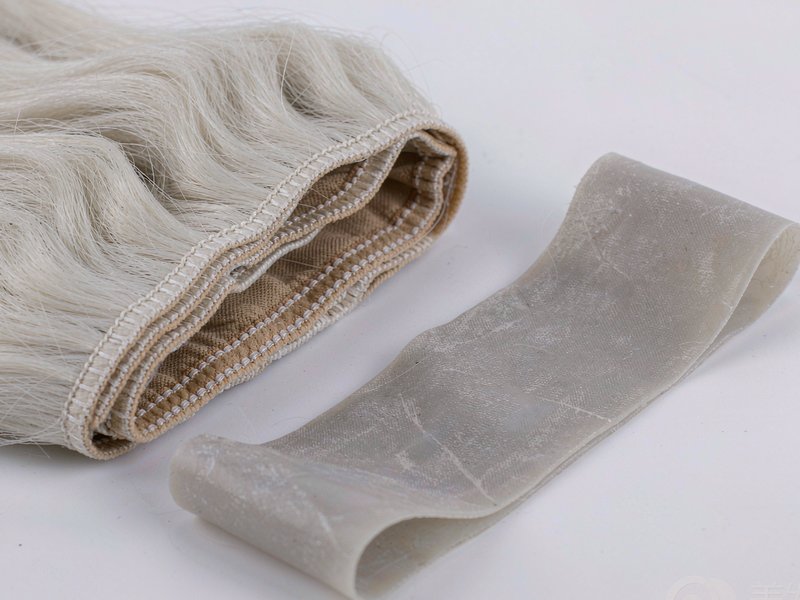
| Sewn tape-in | Hair sewn into a fabric/felt base, then taped | Standard tape-ins | Familiar, cheap | Thicker base, edge fraying, weight |
| Trama de piel de PU | Hair bonded into a polyurethane strip | Seamless tape-ins | Flat, invisible | Cheap versions shed at the PU line |
| Injection craft | Hair injected strand-by-strand into a PU skin base | Premium tape-ins, toppers | Flat, seamless, no return hairs, minimal shedding | Requires precision equipment and skilled labor |
| Keratin bonding | Strands fused with keratin tips (U/I/flat) | Prebonded extensions | 360° natural movement | Depends on bond purity and tip sealing |
| Clip assembly | Wefts fitted with pressure-sensitive clips | Clip-in sets | Reusable daily | Clip sewing quality decides lifespan |
All of these can be made with excellent hair. The craft decides what that hair actually feels like in the chair.
Injection Craft: The Everbeauting Standard
Among all the crafts above, injection craft is the one we have invested in most deeply — and the one we recommend buyers pay closest attention to.
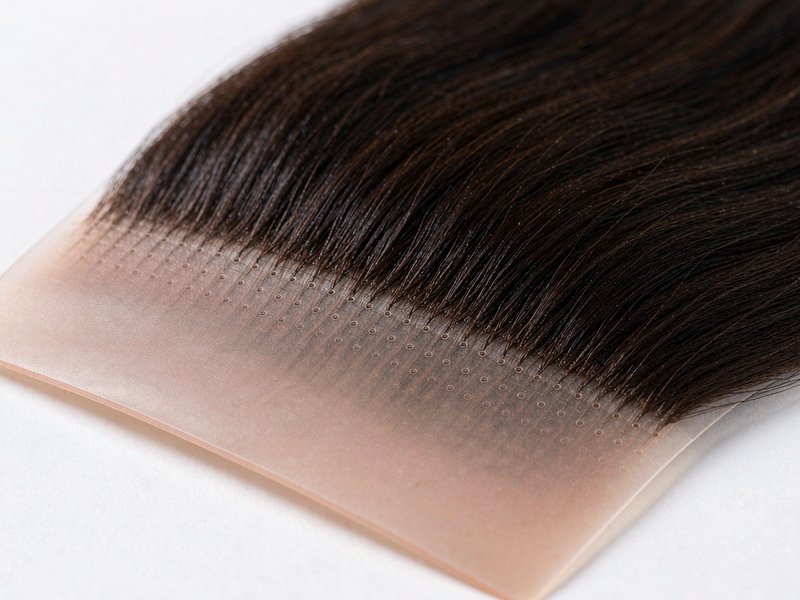
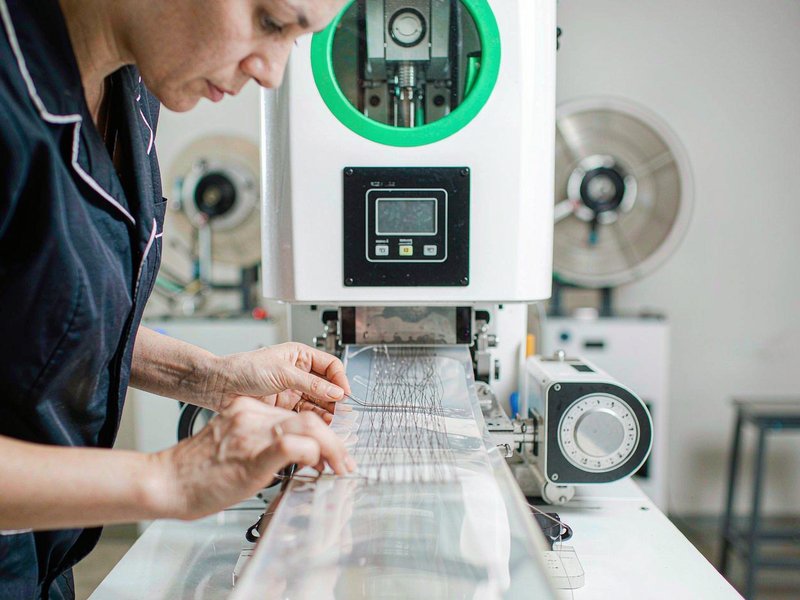
How injection craft works. Instead of sewing hair into fabric or gluing it onto a strip, injection craft uses precision equipment to inject hair strands directly into a thin, skin-like polyurethane (PU) base, one follicle-style insertion at a time. The hair appears to “grow” out of the base — the same way hair grows out of a natural scalp.
What that changes for the wearer:
- Truly invisible attachment. The PU base is translucent and ultra-thin, so it disappears against the scalp and hair. No ridge, no fabric edge, no shadow line — even high ponytails and slick-back styles stay clean.
- No return hairs. Sewn and glued constructions leave short “return” hairs sticking back toward the scalp, which cause that prickly, itchy feeling. Injection craft eliminates them — a comfort difference clients feel on day one.
- Minimal shedding. Because every strand is anchored individually inside the PU, shedding at the base is dramatically lower than glued constructions, where adhesive creep releases whole sections over time.
- Flat, weightless comfort. Injection panels lie flush against the head, which makes them ideal for fine hair and for clients who wear their hair up.
- Better tape performance. The smooth PU surface gives adhesive tape a uniform, residue-free backing — so tape bonds stronger and removes cleaner, panel after panel.
You can see the difference immediately: our Extensiones de cabello con cinta de inyección de color Ombre and Extensiones de cabello con cinta de inyección virgen de flores show the skin-like base up close, and the same craft carries into our Topper de base de inyección de color rubio line. The same construction is also available as a seamless PU skin weft for weft-installation salons.
How Craft Shows Up in Real-World Performance
Craft is not an abstract concept — it shows up in the exact complaints (or compliments) salons receive:
- Shedding: weak knotting and glue creep release hair at the base; injection anchoring keeps strands in place through dozens of washes
- Visibility: bulky seams and fabric edges show through fine hair; injection PU panels disappear
- Comfort: return hairs and stiff seams irritate the scalp; injected bases feel like nothing
- Durabilidad: poorly reinforced wefts unravel when cut or washed hot; precision injection panels hold their shape across 3–4 reapplications
- Restyling: lumpy bases bunch up in ponytails; flat injection panels stay smooth
In short: hair quality decides how the product looks in week one. Craft decides how it performs in week sixteen.
Craft vs. Hair Quality: Which Matters More?
It is not either/or — it is a multiplication. Premium hair with poor craft still sheds and shows. Excellent craft cannot rescue non-Remy hair that tangles by week six. When we quote a product, we quote both sides of the equation:
- Hair quality = the material (origin, cuticle alignment, processing, color work)
- Craft = the engineering (base construction, anchoring method, density distribution, finishing)
Buyers who only negotiate on hair grade often discover too late that their supplier’s sewing, gluing or PU work is where the cost was quietly cut. The result shows up as inconsistent batches — one shipment performs, the next sheds. That is why craft capability belongs at the top of every supplier evaluation checklist.
How to Evaluate Craft Before Placing a Bulk Order
Ask every prospective supplier for these five things:
- Close-up photos of the base — not styled on a model, but the raw attachment under bright light. You should be able to see the anchoring method clearly.
- A physical sample you can wash 10 times and reinstall. Shedding, edge fraying and PU splitting show up fast under real use.
- Gram weight verification — weigh panels against the stated weight. Craft shortcuts often hide under-weight density.
- Shedding test: gently tug the hair at the base over white paper. A few strands are normal; clouds of hair are not.
- Their craft specification in writing: base thickness, PU material, adhesive grade, knot reinforcement — professional manufacturers can state these precisely because they control them.
If a supplier cannot describe their own craft in writing, they do not control it.
Inside Everbeauting’s Injection Production Line
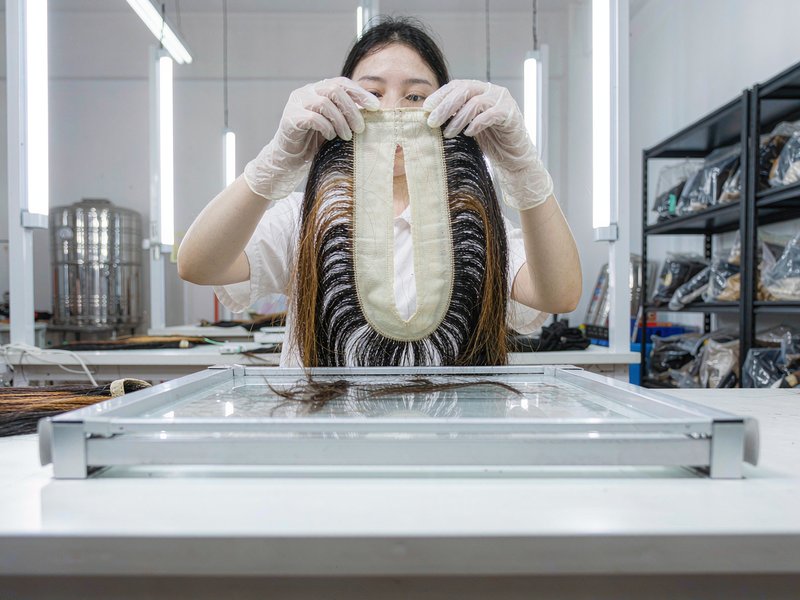
Because injection craft is our core differentiator, it is also where we concentrate our quality control:
- Strand-by-strand injection with calibrated equipment, so density is even from root to tip and panel to panel
- Skin-grade PU base — translucent, soft, and tested for tear resistance and long-term flexibility
- Per-batch QC: every production batch is checked for injection firmness (strand-pull testing), base flatness and gram-weight accuracy before packing
- Adhesive-lot consistency for tape backing, so salons get the same bond strength all year
- Sealed, residue-free packing so panels arrive ready for installation
For salon chains and distributors, that consistency is the real product: your clients’ experience in month four should match their experience in week one.
Common Craft-Related Complaints and Their Root Causes
“My extensions shed constantly.” Almost always a knotting/glue issue, not a hair issue. Cheap sewn or glued bases release strands as adhesive creeps and thread loosens.
“The tape edge lifted and frayed after three weeks.” Fabric-based tape-in edges absorb moisture and fray. PU-based injection panels do not.
“Clients feel the returns scratching their scalp.” Return hairs are inherent to sewn construction. Injection craft has none — which is why fine-hair and sensitive-scalp clients notice the upgrade immediately.
“My weft unraveled where the stylist cut it.” Machine wefts with weak seams unravel when cut. Specify reinforced-seam genius wefts if cutting is part of your salon’s method.
“The batch we bought this quarter feels different from last quarter.” Uncontrolled craft. A professional manufacturer maintains written craft specifications and tests every batch — ask for them.
Conclusion
When you buy hair extensions, you are buying two things: the hair and the craft. The hair gets all the attention in marketing, but craft is what your clients actually feel — in the flatness of the attachment, the comfort at the scalp, the shedding after week six, and the reviews they leave.
If you take one thing from this guide, take this: ask about craft as specifically as you ask about hair. And when you compare suppliers, put injection-crafted products on the sample list — because once you see how flat, seamless and shed-free a well-made injection panel is, it is very hard to go back.
About The Author
The Everbeauting Hair Extensions Team is the production team behind siempre embelleciendo, a manufacturer of 100% Remy human hair extensions serving chain salons, wholesalers and distributors across Europe and North America. Our core craft is injection: hair injected strand-by-strand into skin-grade PU bases for tape-in extensions, wefts and toppers, alongside keratin bond, hand-tied, genius weft and clip-in lines. Every batch is verified for cuticle alignment, gram-weight accuracy and injection firmness before shipment. Better craft is not a feature — it is our whole business model.
Want samples of our injection tape-in and topper lines, or a private-label program built on them? Contact the Everbeauting team for catalogs and wholesale quotations.
FAQ: 10 Most-Asked Questions About Hair Extension Craft
1. What does “craft” mean when buying hair extensions?
Craft is the workmanship that assembles hair into the finished product — how strands are anchored into wefts, bases or bonds, what materials form the attachment, and how flat, secure and consistent the construction is across batches.
2. Which is more important: hair quality or craft?
Both, and they multiply. Premium hair with poor craft still sheds and shows; excellent craft cannot save non-Remy hair. Evaluate suppliers on both material and workmanship.
3. What is injection craft in hair extensions?
Injection craft injects hair strands one by one into a thin, skin-like polyurethane (PU) base, so the hair appears to grow naturally out of the base — like a scalp. It is the flattest, most seamless and most comfortable construction available for tape-ins and toppers.
4. Why does injection craft shed less than sewn or glued constructions?
In sewn or glued products, adhesive creep and thread loosening release strands over time. In injection craft every strand is individually anchored inside the PU, so shedding at the base is dramatically lower.
5. Do injection tape-ins have return hairs?
No. Return hairs — the short hairs that fold back toward the scalp in sewn constructions — do not exist in injection craft, which is why it feels noticeably more comfortable, especially for sensitive scalps.
6. Are injection PU bases visible in the hair?
No. The PU base is translucent and ultra-thin, so it disappears against the scalp — even in high ponytails and slick-back styles.
7. How do I test craft quality before a bulk order?
Request close-up base photos, a physical sample you can wash 10 times, a shedding test over white paper, gram-weight verification, and the supplier’s written craft specification (base thickness, PU material, adhesive grade).
8. Can injection craft be used for products other than tape-ins?
Yes. The same injection base is used for skin-weft constructions and toppers, and it pairs with keratin bonding and clip systems. Any product that needs a flat, seamless base benefits from it.
9. Why do identical hair grades perform differently between suppliers?
Because craft differs. Base construction, anchoring method, density distribution and QC discipline change real-world performance — which is why two “100% Remy” products can behave nothing alike.
10. Does Everbeauting offer private-label injection products?
Yes. Our injection tape-in extensions, PU skin wefts and injection-base toppers are available wholesale with custom colors, lengths, packaging and private-label branding for salons, distributors and hair brands.
Related Reading From The Everbeauting Blog
- Everbeauting hair extensions blog — buying guides, care tips and product knowledge for professionals
- How to Choose High-Quality Human Hair for Tape-In Hair Extensions
- Do Tape Ins Slip Easily With Oily Scalp?
- How To Maintain Keratin Bond Hair Extensions To Extend Lifespan
© Everbeauting Hair Extensions. This guide may be republished by our salon and distributor partners with attribution and a link back to this page.