


A keratin bond hair extensions manufacturer shares 12 proven maintenance rules that help clients get 4–6 months of wear — plus salon aftercare protocols, washing schedules, and product do’s and don’ts.
If you run a salon, distribute to stylists, or sell hair extensions at scale, you already know the truth that most end consumers don’t: keratin bond extensions don’t fail because of the hair — they fail because of maintenance.
As the factory behind Everbeauting hair extensions, we’ve supplied keratin bond extensions (also called fusion, U-tip, I-tip, and keratin tip) to chain salons, wholesalers, and distributors across the US, UK, and Europe for years. We’ve seen identical hair perform brilliantly in one salon and get refund complaints in another. The difference is almost never the product. It’s the aftercare system — or the lack of one.
This guide condenses what we’ve learned from thousands of salon partnerships into a practical maintenance playbook. Use it to train your stylists, build your client aftercare program, and cut your warranty and complaint costs.
Quick answer: Keratin bond hair extensions last 3–6 months when properly maintained. The core rules are: wash 2–3 times per week with sulfate-free, bond-safe shampoo; never apply conditioner or oil to the bonds; dry bonds completely after every wash; brush with a loop brush twice daily starting at the ends; keep heat under 180°C / 350°F and away from the keratin; sleep in a loose braid on silk; avoid chlorine and salt water saturation; and book a professional maintenance check every 6–8 weeks.
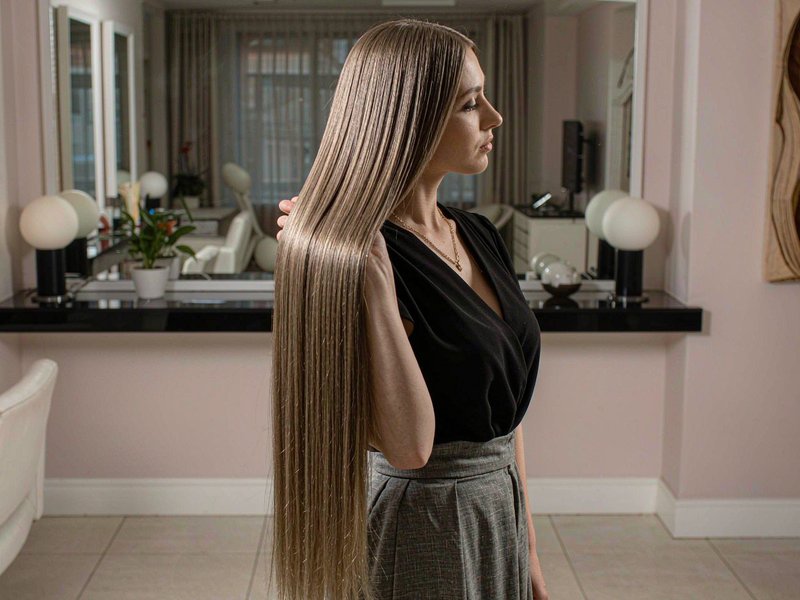
What Are Keratin Bond Hair Extensions?
Keratin bond extensions — often marketed as fusion extensions, U-tips, I-tips, flat tips, or keratin tip extensions — are strands of hair pre-bonded at the tip with keratin protein, the same protein human hair is made of.
During installation, a stylist uses a professional fusion heat connector (set to roughly 140–180°C / 280–350°F) to soften the keratin tip and fuse it around small sections of the client’s natural hair. The result:
- Invisible attachment — the bond sits flat against the head, hidden under the hair, making this one of the most discreet methods for updos and fine hair.
- 360° natural movement — unlike wefts, each strand moves independently.
- No daily removal — bonds stay in for weeks at a time, which is exactly why maintenance matters so much.

The keratin itself is a protein adhesive. Heat softens it; oils, alcohol, and aggressive chemicals degrade it; tension breaks it. Almost every “failure” clients complain about — slipping, shredding, matting at the root — traces back to one of those three factors. Keep that triangle (heat, oil, tension) in mind and the rest of this guide writes itself.
How Long Do Keratin Bond Extensions Really Last?
Straight numbers from our factory data and salon partner feedback:
| Factor | Typical Lifespan | With Excellent Aftercare |
|---|---|---|
| The bonds (attachment) | 8–12 weeks before repositioning | 12–16 weeks |
| The hair itself (reusable) | 2 reapplications | 3–4 reapplications |
| Total wear per set | 3–4 months continuous | 4–6 months+ of usable life |
Two things affect lifespan more than anything else:
- Hair quality at purchase — Remy cuticle-aligned hair (all cuticles facing the same direction) resists tangling far longer than non-Remy or silicone-coated hair. Non-Remy hair looks fine for 4 weeks, then the acid bath coating wears off and matting begins. This is why B2B buyers should always verify cuticle alignment and origin before committing to a supplier.
- Maintenance discipline — the gap between a 3-month experience and a 6-month experience is almost entirely aftercare.
This guide is about factor two.
The 12 Golden Rules of Keratin Bond Maintenance
Give this list to every client at installation. Print it. It’s the single highest-ROI aftercare document your salon can own.
1. Wait 48 hours before your first wash
Fresh keratin bonds need a full day or two to cool, harden, and fully set. Washing, sweating heavily, or steaming in the first 48 hours softens the bond before it has cured, which is the #1 cause of early slippage.
2. Wash 2–3 times per week — not daily, not never
Daily washing swells and shrinks the keratin bond repeatedly (shower heat + product residue), which fatigues the bond. Washing too rarely lets sebum and product buildup migrate into the bond line, which also breaks it down. Two to three washes per week is the sweet spot.
3. Use sulfate-free, bond-safe shampoo only
Sulfates are aggressive degreasers. They strip the keratin tip and the natural oils that keep the extension hair supple. Clients should use a sulfate-free, paraben-free, low-pH shampoo designed for extensions. A stylist tip: dilute shampoo 50/50 with water in an applicator bottle before applying — it distributes evenly and is gentler on bonds.
4. Never put conditioner, masks, or oils on the bonds
This is the rule clients break most often. Conditioner is designed to deposit softening agents and oils — exactly the substances that dissolve keratin’s grip. The correct technique:
- Condition from mid-length to ends only, staying at least 5 cm (2 inches) away from the bond line.
- The same applies to hair masks, argan oil, coconut oil, serums, and leave-in sprays.
- Think of the top 2 inches of the head as a “no-product zone.”
5. Dry the bonds 100% after every wash — no exceptions
Sleeping on or air-drying wet bonds is catastrophic. Wet keratin is soft; pressed against a pillow overnight it deforms, weakens, and mats into the natural hair at the root. Clients must blow-dry the bond area fully before sleeping, even on wash days when they want to let the lengths air-dry. Bonds first, lengths second.
6. Brush correctly: loop brush, twice a day, from the ends up
Use a loop brush or a soft bristle brush (never one with balls at the tip of the bristles — they snag on bonds). Method:
- Hold the hair above the bond section with one hand to remove tension.
- Start at the ends, detangling downward in small sections.
- Work upward gradually — but stop at the bond line, don’t rip the brush through it.
- Brush morning and night, plus before and after swimming, gym, and bed.
Twice-daily brushing prevents the root matting that develops between bonds — the matting that stylists later have to cut out.
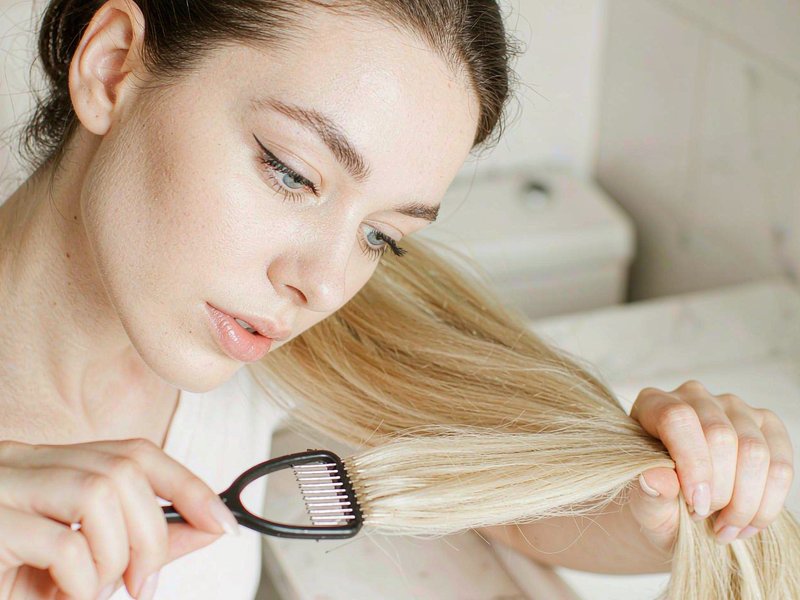
7. Keep heat styling below 180°C / 350°F — and away from the keratin
Flat irons and curling wands are fine on the extension hair within temperature limits, but the hot plate must never touch or slide over the keratin bond. Heat directly on the bond melts or cracks it. Train clients to grip sections below the bond when straightening and to always use a heat protectant on mid-lengths and ends.
8. Sleep in a loose braid, on silk or satin
Friction is the enemy. A loose low braid (never a tight ponytail — that stresses the bond line) plus a silk or satin pillowcase reduces friction tangling by more than half. Never sleep with wet hair. Ever.
9. Chlorine and salt water: wet first, protect, rinse immediately
Swimming is fine with preparation:
- Wet the hair with clean water before entering the pool or sea — saturated hair absorbs less chlorinated/salt water.
- Apply a leave-in from mid-lengths down, braid the hair.
- Rinse and wash immediately after swimming. Chlorine left to sit in bond areas degrades keratin and turns blonde shades brassy.
- Skip the diving board: bonds are strong, but sudden water impact on hair tangles everything.
10. No tight ponytails, no aggressive updos at the bond line
Constant high tension at the bond line pulls bonds out prematurely and, worse, stresses the client’s natural hair. Teach clients to switch to low, loose styles, and to use soft fabric ties without metal.
11. Book a professional maintenance appointment every 6–8 weeks
No amount of home care replaces a stylist’s eyes. Every 6–8 weeks, a professional check should: remove any shed-hair mats at the root, verify bond integrity, reposition any slipped bonds, and trim extension ends to keep the shape fresh. This appointment is also where salons upsell the next row — maintenance visits are a retention engine, not a cost.
12. Reposition bonds every 8–12 weeks as the hair grows
As natural hair grows ~1.25 cm per month, bonds move away from the scalp. Longer outgrowth means more weight leverage on the client’s hair, more tangling at the root, and more visible bonds. Repositioning (removing and reattaching bonds higher up) on schedule is what turns a 3-month set into 6 months of total wear from the same hair.
The Correct Washing Routine (Step by Step)
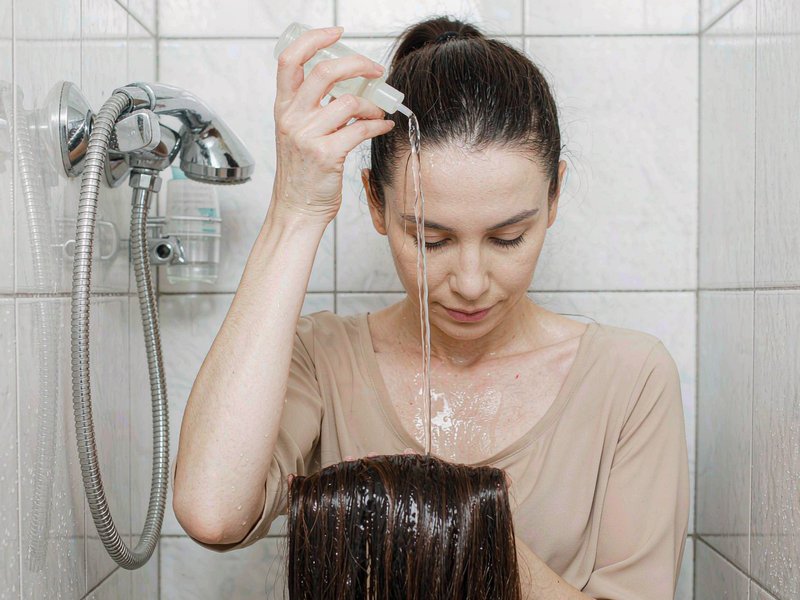
Before washing:
- Brush thoroughly from ends to roots with a loop brush. Never wash tangled hair.
Washing:
- Wet the hair with lukewarm water (never hot). Let water run downward, not scrubbed in all directions.
- Dilute sulfate-free shampoo with water in an applicator bottle. Apply to the scalp and root area, massaging with fingertips in gentle downward strokes — never circular scrubbing that tangles lengths or disturbs bonds.
- Let the suds rinse through the lengths on their way down. Do not bunch the hair on top of the head (“washing like a sweater” is the classic mistake).
- Repeat only if needed — one thorough wash is usually enough with a good shampoo.
Conditioning:
- Apply bond-safe conditioner mid-length to ends only, 5 cm away from bonds. Leave 2–3 minutes. Rinse cool.
Drying:
- Squeeze — don’t wring — water out with a microfiber towel or cotton T-shirt. No rough rubbing.
- Apply heat protectant to lengths. Blow-dry the bond line completely first, pointing the nozzle downward, then dry the rest. Alternatively air-dry the lengths but always finish the bonds with a dryer.
- Brush once more, ends first.
Total time: about 15 minutes. Clients who follow this routine double the life of their investment.
What Products to Use — and What to Avoid
Use these
- Sulfate-free, extension-safe shampoo (low pH, ~4.5–5.5)
- Lightweight conditioner for mid-lengths/ends only
- Alcohol-free leave-in spray (mid-lengths down)
- Heat protectant — mandatory before any hot tool
- Loop brush / extension brush
- Silk or satin pillowcase and soft hair ties
- Bond-safe dry shampoo between washes (spray at the root, at least a hand’s width from bonds, sparingly)
Never use on or near the bonds
| Product / Ingredient | Why it’s a problem |
|---|---|
| Sulfate shampoos (SLS/SLES) | Strip keratin, cause slippage and dryness |
| Conditioner, oils, masks at the bond line | Oils dissolve keratin’s grip |
| Alcohol-heavy styling sprays (Alcohol Denat. early in the ingredient list) | Dry out and embrittle bonds and hair |
| Clarifying / anti-dandruff shampoos | Too aggressive; designed to strip |
| Purple shampoo applied to bonds | Can stain keratin tips and dry them out; use on lengths only, diluted |
| Oil-based sunscreens | Same as any oil near bonds — plus speeds color fade |
| Silicone-heavy cheap serums | Buildup migrates into the bond line and attracts dirt |
A Weekly and Monthly Maintenance Schedule
Daily: brush morning and night, ends first, holding the root section · loose braid before sleep · heat protectant before any hot tool.
Every wash (2–3x/week): full routine above; bonds 100% dry before bed.
Weekly: deep-condition lengths (below bonds) once a week · check bond line for visible slipping or buildup.
Every 4 weeks: trim split ends on the extensions (lengths only) · clarify lengths only if buildup is visible (never bonds, once a month at most).
Every 6–8 weeks: professional maintenance appointment.
Every 8–12 weeks: full repositioning service.
Salon-Side Best Practices: How Pros Extend Wear Time
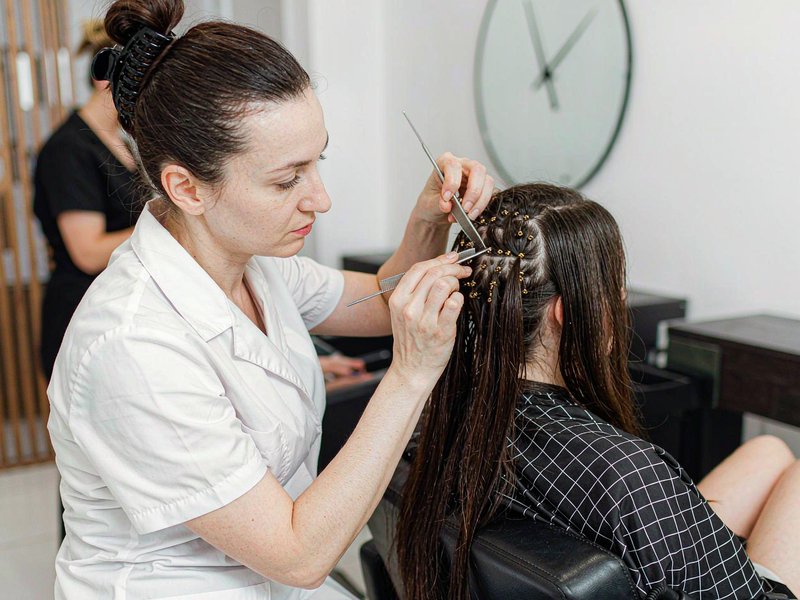
For our salon, distributor, and wholesale partners — the aftercare experience starts long before the client washes their hair at home.
1. Match bond size to hair density. Oversized bonds on fine hair look lumpy and cause stress; undersized bonds on coarse hair slip. At Everbeauting we offer 0.5 g, 0.8 g, and 1 g bond weights (U-tip, I-tip, and flat tip) — matching the tip format to the client’s density dramatically reduces callbacks. Flat tips, for example, lie flush for clients who wear ponytails daily and cut visible-slippage complaints noticeably.
2. Set the fusion iron correctly. Most installers run too hot. 160–170°C works for the vast majority of bond types; above 180°C you’re charring keratin and shortening bond life. Calibrate irons monthly — cheap irons drift 20–30°C from their dial setting.
3. Take smaller sections than feel necessary. Under-securing to save time is the root cause of “the extensions didn’t last” reviews. A bond on too much natural hair can’t shrink-wrap properly.
4. Hand every client a printed aftercare card + the 48-hour rule verbally. Verbal instructions evaporate in the salon chair. A card with the 12 rules (above) and your maintenance booking schedule printed on it turns aftercare into repeat bookings.
5. Build the maintenance appointment into the sale. Salons that pre-book the 6–8 week check at installation report dramatically higher retention — and catch problems (mats, slipped bonds, product misuse) while they’re still fixable.
6. Source hair that survives the journey. No aftercare program saves non-Remy hair. For distributors: always demand cuticle-aligned Remy hair, verified bond keratin purity, and consistent gram weights per strand. Your salon clients’ reviews are built on your supplier’s QC. This is exactly what we control at the factory level — every Everbeauting batch is cuticle-verified and gram-checked before shipment.
Common Mistakes That Destroy Keratin Bonds
- Washing daily — bond fatigue from repeated wet/dry cycles.
- Conditioner at the root — the single most reported cause of slippage we hear from salon feedback.
- Going to bed with wet bonds — guaranteed root matting within 2 weeks.
- Skipping the loop brush — generic brushes with tipped bristles snag and tear bonds out.
- Flat ironing over the bond — instant bond damage, sometimes visible melting.
- Oily scalp treatments and hair-growth oils migrating down — recommend applying only at bedtime, on non-bond areas, and washing per schedule.
- Sunbeds and saunas without protection — combined heat + sweat softens keratin; wrap hair and keep exposure short.
- DIY removal — pulling bonds out at home rips out natural hair. Removal takes 10 minutes with proper remover solution and pliers by a pro.
Troubleshooting: Bonds Slipping, Tangling, Shedding
Bonds slipping within 2 weeks? Check: wash frequency in the first 48 hours, conditioner placement, oil-based products at the root, iron temperature at installation. If multiple clients of one stylist report it, the installation technique or iron calibration is usually the cause — not the product.
Matting at the root between bonds? Almost always under-brushing or sleeping with damp bonds. The stylist should gently open the mat with a tail comb during the maintenance visit — never cut from the top; cutting natural hair at the root is how clients lose length.
Extension hair tangling and drying out after week 6? If the hair itself (not the root area) is tangling, the hair quality was likely non-Remy or over-processed. Quality cuticle-aligned hair stays smooth for the full wear cycle with basic care. This is a sourcing conversation, not an aftercare one.
Excessive shedding of the extension hair itself? A few strands per day is normal (they’re attached to bonds, so they collect visibly). True shedding at the bond — hair pulling out of the keratin tip — indicates a manufacturing fault in the tip sealing. A supplier should replace such batches; any Everbeauting partner can claim replacement directly with us under our QC guarantee.
Conclusion
Keratin bond hair extensions are a premium service — and clients judge them by how long they last. The evidence from our factory floor and from hundreds of partner salons is consistent: the same set of extensions can last 3 months or 6 months, and maintenance is the variable.
The formula is simple enough to print on one card: gentle sulfate-free washing 2–3 times a week, zero product at the bond line, bonds bone-dry before sleep, twice-daily loop brushing, heat below 180°C away from the keratin, protection before swimming, and a professional maintenance visit every 6–8 weeks with repositioning every 8–12.
For salons and distributors, aftercare is not just client service — it’s your warranty policy, your review profile, and your recurring-revenue engine, all in one document. Train it, print it, and book it.
About The Author
The Everbeauting Hair Extensions Team is the production team behind Everbeauting, a manufacturer of 100% Remy human hair extensions serving chain salons, wholesalers, and distributors across Europe and North America. We specialize in keratin bond (U-tip, I-tip, flat tip), tape-in, clip-in, and weft extensions, with factory-direct quality control covering cuticle alignment verification, gram-weight accuracy, and bond strength testing on every batch. This guide draws on years of installation feedback from our professional partners — because when our clients’ clients get better results, everyone’s business grows.
Want maintenance protocols or private-label aftercare cards for your salon brand? Contact the Everbeauting team for wholesale catalogs, custom packaging, and stylist training materials.
FAQ: 10 Most-Asked Questions About Keratin Bond Maintenance
1. How long do keratin bond hair extensions last?
With proper maintenance, the bonds hold for 8–12 weeks before repositioning, and the hair itself can be reused through 3–4 reapplications — for a total lifespan of 4–6 months of usable wear per set. Poor aftercare shortens this to as little as 6–8 weeks.
2. How often should I wash keratin bond extensions?
Two to three times per week. Daily washing fatigues the keratin through repeated swelling and drying; washing less than once a week allows sebum and buildup to break down the bond line.
3. Can I use regular shampoo on keratin bonds?
No. Regular shampoos usually contain sulfates, which strip the keratin tip and dry out the hair. Use a sulfate-free, low-pH, extension-safe shampoo, diluted 50/50 with water for gentlest application.
4. Why can’t conditioner touch the bonds?
Conditioners, masks, and oils deposit softening agents that dissolve keratin’s adhesive grip, causing slippage. Apply conditioner from mid-length to ends only, keeping at least 5 cm (2 inches) away from the bond line.
5. Can I go swimming with keratin bond extensions?
Yes, with preparation: saturate hair with clean water first, apply leave-in from mid-lengths down, braid the hair, and rinse and wash immediately after swimming. Prolonged chlorine or salt water exposure degrades bonds and hair color.
6. How should I sleep with keratin bond extensions?
Never sleep with wet hair. Brush gently, secure the hair in a loose low braid, and sleep on a silk or satin pillowcase to minimize friction tangling.
7. What heat can I use on keratin bond extensions?
Keep hot tools at or below 180°C / 350°F and never let the hot plate touch the keratin bond itself. Always use heat protectant on the lengths, and grip sections below the bond when styling.
8. Why are my keratin bonds slipping out early?
The most common causes are: washing within the first 48 hours, conditioner or oils at the bond line, an overly hot or mis-calibrated fusion iron at installation, or taking sections too large during fitting. Review the installation technique first if multiple clients report slippage.
9. How often should keratin bonds be repositioned?
Every 8–12 weeks, as natural hair growth moves the bonds away from the scalp. Timely repositioning prevents root matting, protects the client’s natural hair from weight stress, and lets you reuse the same hair for multiple applications.
10. Are keratin bond extensions damaging to natural hair?
Installed correctly by a professional, with correct bond size and maintenance visits every 6–8 weeks, keratin bonds are one of the least damaging long-wear methods. Damage almost always comes from oversized sections, skipped maintenance, DIY removal, or leaving bonds in past 12 weeks.
Related Reading From The Everbeauting Blog
- Everbeauting hair extensions blog — sourcing guides, salon tips, and product knowledge for professionals
- Tape-Ins vs. Genius Wefts vs. K-Tips: Which “Invisible” Blend Is Right for Your Hair Type?
- Can You Wear High Ponytails With Genius Weft Hair Extensions?
© Everbeauting Hair Extensions. This guide may be republished by our salon and distributor partners with attribution and a link back to this page.