


Quick answer: A trama genial stands out because it combines the best of two older wefts: it is as thin and flat as a hand-tied weft (3–4 mm), yet as strong and dense as a machine weft — and unlike either, it can be cut anywhere along the track without unraveling. Because the hair is woven so that no short return hairs stick back toward the scalp, it feels smooth from day one, which is exactly why fine-hair clients and busy stylists have made it their default weft since 2024. Below, a factory that produces genius wefts daily explains the construction, the cutting and styling workflow, lifespan, and what to check before buying.
1. Introduction: The Weft That Ended the Trade-Off
For decades, stylists choosing a weft had to pick between two compromises. Machine wefts were strong and full but thick, rigid, and impossible to cut without them fraying apart. Hand-tied wefts were feather-light and beautiful but fragile — cut one, and it unravels in your hands.
The genius weft was engineered to end that trade-off. It keeps the flat, flexible profile that clients love about hand-tied wefts, but builds it with a reinforced woven structure that survives cutting, clamping, and months of washing. Add to that the absence of return hairs — the short folded strands that make ordinary wefts feel scratchy against the scalp — and you have the first weft that most stylists now describe as “the default.”
This guide is written from the manufacturing side: what the construction actually is, why it cuts cleanly, how it installs, how long it lasts, and how to judge quality before you stock it.
2. What Exactly Is a Genius Weft?
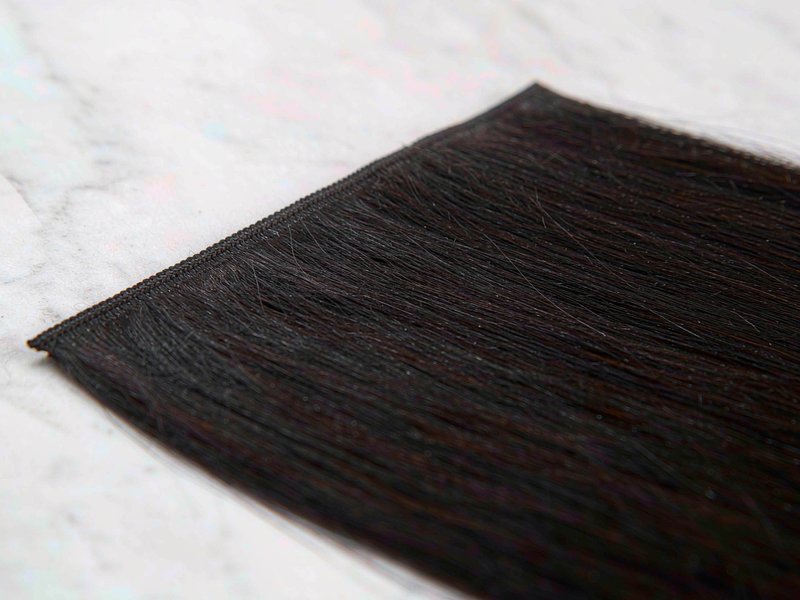
A genius weft is a human hair weft built on a hybrid woven base. Strands are folded and woven into a flat, flexible band — thicker than a hand-tied thread knot but dramatically thinner than a machine weft’s reinforced cord.
Three structural facts define it:
- Thin track: 3–4 mm. Compare 5–8 mm for machine wefts and 2–3 mm for hand-tied. The genius weft sits close enough to the scalp to hide under a single layer of fine hair.
- Reinforced weave, not thread knots. The hair is anchored by a woven band that distributes tension across the whole track — which is precisely why it tolerates cutting.
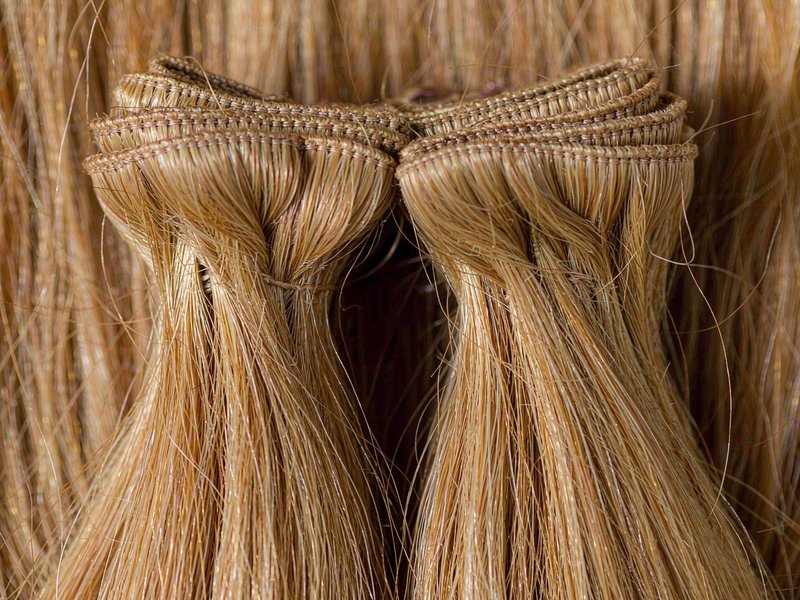
- No return hairs. In a machine weft, hair folds over a cord, leaving thousands of short ends pointing back at the scalp. In a genius weft, returns are woven inside the band, so the underside is smooth.
For readers who want the full background, our complete guide to genius wefts covers the history and construction in depth; here we focus on what makes the category stand out in daily salon work.
3. Reason One: Cuttable Anywhere — Without Unraveling
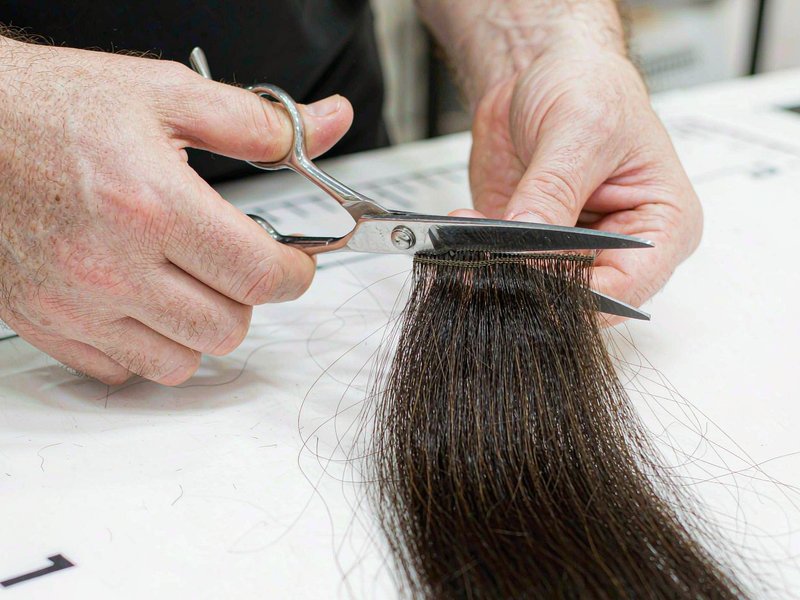
This is the headline feature, and it changes how stylists work:
- Row planning becomes free. A hand-tied weft must be sized exactly; too long and you have excess, too short and you re-sew. A genius weft is simply cut to the measured length of the row — no knots to secure, no sealant, no fraying.
- Custom head shapes stop being a problem. Small heads, large heads, asymmetric hairlines, a row that stops behind the ear — scissors handle all of it.
- Less waste, lower cost per install. Offcuts from hand-tied wefts are dead stock. Genius weft offcuts are usable on the next row.
- Faster appointments. Cutting to length takes seconds, and there is no re-knotting step. Row sizing, which used to be the slowest part of a sew-in, disappears from the booking.
One caution we give every stylist we train: cut cleanly between attachment points, and treat the cut edge with a dab of fray-check for absolute peace of mind. The weave will hold regardless — the sealant is just insurance.
4. Reason Two: No Return Hairs — Comfort From Day One
Return hairs are the hidden reason clients dislike ordinary wefts. Every strand that folds over a machine cord leaves a short, stiff end pointing directly at the scalp. Multiply that by a full head, and the result is a prickly halo that clients feel every time they run a finger under their hair.
Genius wefts solve this structurally, not cosmetically:
- The underside feels smooth — no scratch points, no itching in week one, no adjusting period.
- Fine and sensitive scalps tolerate it better. Clients who found machine wefts “unwearable” rarely report discomfort with genius wefts.
- Zero-frizz at the root. Return hairs stick out under sunlight and flat-part styling; with returns woven inside, the root line stays clean and photo-ready.
This single difference is why we see salons switch their entire fine-hair clientele to genius wefts within one season.
5. Reason Three: Flat Enough for Fine Hair, Strong Enough for Volume
The genius weft’s hybrid build gives it a rare double capability:
- Density without bulk. A standard 100 g genius weft pack delivers near-machine weft fullness on a track barely thicker than hand-tied — so clients get volume without the “shelf” look.
- Weight spread evenly. The woven band distributes load along the whole track instead of concentrating it at knots, which reduces tension points and stress on natural hair — a point we develop in our guide to weft damage myths and aftercare.
- Bendable on every curve. The track flexes around the occipital bone and behind the ears without lifting at the edges, even under sleek ponytails.
6. Genius Weft vs Every Other Weft: The Practical Table
| Type | Track | Cuttable? | Return hairs | Install | Best for |
|---|---|---|---|---|---|
| Machine weft | 5–8 mm cord | No | Yes, many | Sew-in | Thick hair, budget installs |
| Hand-tied weft | 2–3 mm knots | No (unravels) | Few, at knots | Sew-in | Traditionalists, lightest feel |
| Genius weft | 3–4 mm woven | Yes, anywhere | None exposed | Sew-in / beads | Fine hair, fast services |
| Butterfly (PU hole) weft | 0.8–1.2 mm PU | Between holes | None | Micro beads, no-sew | Fastest installs, fine hair |
| Tape-in | PU tab per panel | — | — | Cinta | Quick volume, flat feel |
The honest summary: butterfly wefts win on installation speed, machine wefts on price, hand-tied on tradition — and genius wefts win on the overall balance stylists live with every day. Our butterfly weft vs genius weft comparison covers that sibling rivalry in detail, and our genius vs hand-tied breakdown is the one to read before converting a fine-hair client base.
7. How Stylists Install a Genius Weft
The genius weft supports the two installation methods most salons already know:
Sew-in (traditional). Section a track, braid or bead the foundation, and sew the weft along the row with a C-curve needle. Because the track is thin, the sewn row sits flatter than any machine weft install — and because it’s cuttable, there is no “fitting the row to the weft” struggle.
Beaded rows (no braid). Silicone-lined micro beads are placed along a parted row, and the weft is sewn or clamped onto the beads. This keeps natural hair in its natural state and makes move-ups faster.
Either way, the workflow is the same three steps: measure, cut, attach. A trained stylist finishes a full head in 90–120 minutes for a sew-in, less for a beaded row.
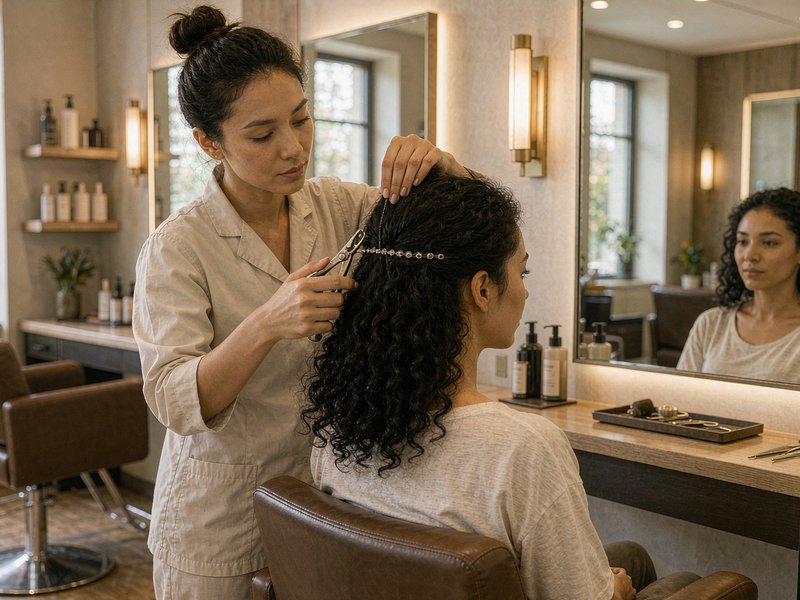
The standard toolkit — hooks, beads, pliers, needles — is all in our weft tools and accessories range, and our team advises on bead sizing per hair density.
8. What “Good Hair” Must Mean on a Genius Weft
The track is only half the product. The hair itself decides whether clients come back:
- 100% Remy, cuticle-aligned — all strands running root-to-tip in one direction; this is what prevents matting after the third wash
- Double-drawn — short strands removed by hand so the weft is full from root to end, not top-heavy
- Never blended — no synthetic fiber, no animal hair, no “human hair blend” fine print
- Colorfast and low-shed — verified by wash tests and white-paper shedding counts on every batch
This is the standard we enforce on our invisible genius wefts, and the logic behind it is explained in why craft matters when buying hair extensions. A beautiful woven track with contaminated hair inside is still a failed product.
9. Lifespan and Reuse: What Stylists Can Promise Clients
| Stage | Expected performance |
|---|---|
| Wear per install | 6–8 weeks before a move-up |
| Reuse cycles | 2–3 with proper care |
| Total service life | 4–6 months of active wear |
| Most common failure cause | Skipped move-ups or harsh root products — not the weft itself |
Because the woven track survives repeated clamping, a genius weft is re-used far more reliably than a hand-tied weft, whose knots loosen with each cycle. For clients, that means lower cost per month of wear — and for salons, a reason the same customers return for move-ups on the same weft set.
10. Aftercare We Recommend Printing on Every Care Card
- Washing: 2–3 times weekly, sulfate-free shampoo diluted at the scalp, lather downward
- Brushing: loop brush from the ends upward, twice daily, holding the root
- Sleeping: low braid plus silk or satin pillowcase
- Heat: fine on mid-lengths and ends; avoid pressing directly on the track
- Oils: keep heavy serums away from the root line — oil migrates into beads and thread
- Move-ups: every 6–8 weeks; the same wefts are reused on a fresh row
11. Who Should Stock Genius Wefts?
- Salons with fine-hair clients — the no-return-hair underside and light track make it the safest premium recommendation
- Stylists selling speed — cuttable rows and beaded installs compress appointment times
- Retailers and wholesalers — genius wefts carry the best margin-to-complaints ratio in the weft family, because the two classic complaint sources (shedding from cutting, itching from returns) are engineered out
- Not the best fit for: clients wanting the absolute fastest no-sew service — that’s the butterfly weft’s niche — or budgets limited to basic machine wefts
12. How We Manufacture and QC Our Genius Wefts
Our genius wefts are built on a dedicated line, and the QC gates are non-negotiable:
- Hair prep: Remy cuticle-aligned hair, hand-sorted, double-drawn, fiber-verified before entering the weft line
- Weaving: the hybrid band is woven and tension-tested so the track cuts cleanly with zero fray
- Batch testing: 10x wash tests, pull tests along the track, white-paper shedding counts, and colorfastness checks on every production lot
- Sample = bulk: the sample a buyer approves is the standard the shipment must meet — in writing
The full hair weft series catalog shows every construction we produce in-house, and for samples or wholesale pricing you can contact the Everbeauting team directly.
13. Buyer’s Checklist Before You Order Genius Wefts
- ✅ Cut-test a sample: scissors through the track; the edge should hold with zero unraveling
- ✅ Feel the underside: run a fingertip along the back; any scratchy returns means returns are exposed
- ✅ Wash the sample 10 times: the track should stay intact and the hair should stay matte-free
- ✅ Confirm hair grade in writing: 100% Remy, cuticle-aligned, double-drawn, zero blending
- ✅ Check density consistency: weigh packs; a 100 g pack should weigh 100 g, not 88 g
- ✅ Ask about batch QC: factories that test every lot will show you the process without hesitation
More sourcing context lives on our Everbeauting blog, where each guide is written by the factory team that makes these products daily.
14. Conclusion
What makes the genius weft stand out is not one feature but the removal of every classic weft compromise at once: a 3–4 mm woven track that cuts cleanly anywhere, an underside with no return hairs to scratch the scalp, near-machine density on a hand-tied-thin profile, and a lifespan that survives 2–3 reuse cycles. For stylists, that adds up to faster appointments, happier fine-hair clients, and fewer complaints per hundred installs.
For buyers, the deciding factor remains the craft behind the track: cuticle-aligned, double-drawn hair woven into a batch-tested band. Choose a factory that cuts, washes, and pull-tests every lot — and the genius weft will earn its name in your salon, one flawless reorder at a time.
15. About The Author
This guide is written by Celine, representing Everbeauting Hair — a professional human hair extensions manufacturer and exporter serving salon chains, wholesalers, and private label brands across Europe and North America. Everbeauting manufactures genius wefts, butterfly (PU hole) wefts, injection tape-ins, and keratin bond extensions in-house, with strict batch QC, low-MOQ sample programs, and full private label support. Sample quality always equals bulk quality — request a sample kit and judge for yourself.
16. 10 Most-Asked Questions
Q1: What makes a genius weft different from a regular weft?
Three things: a thin 3–4 mm woven track (instead of a thick machine cord), a reinforced weave that can be cut anywhere without unraveling, and no return hairs exposed against the scalp. It combines hand-tied flatness with machine-weft strength.
Q2: Can you really cut a genius weft anywhere?
Yes — that is its defining feature. The woven band holds the strands even at a raw cut edge, so stylists cut it to exact row length without knotting or sealing. A dab of fray-check is optional insurance.
Q3: What are return hairs, and why do they matter?
In ordinary wefts, hair folds over a cord and leaves short ends pointing back at the scalp, causing itchiness and root frizz. Genius wefts weave the returns inside the band, so the underside is smooth and comfortable from day one.
Q4: Is a genius weft good for fine hair?
It is one of the best options: the thin track hides under fine hair, the smooth underside suits sensitive scalps, and the even weight distribution lowers tension. Our genius vs hand-tied guide compares them specifically for fine hair.
Q5: How long does a genius weft last?
6–8 weeks per install and 2–3 reuse cycles with proper care — roughly 4–6 months of active wear per weft. Timely move-ups and root-safe products are the biggest factors.
Q6: Can genius wefts be reused?
Yes — unlike hand-tied wefts whose knots loosen with each cycle, the woven genius track survives repeated clamping and re-sewing, so the same set is moved up and reused two to three times.
Q7: How is a genius weft installed?
Two standard methods: a traditional sew-in over braids or beads, or a beaded row where silicone-lined micro beads anchor the weft. Both start with the same steps — measure the row, cut the weft, attach.
Q8: Genius weft vs butterfly weft — which is better?
Genius wefts win on density and sew-in durability; butterfly (PU hole) wefts win on installation speed and the thinnest possible base. Many salons stock both — the full comparison covers the trade-offs.
Q9: Does the genius weft damage natural hair?
No more than any well-installed weft — less than most, thanks to even weight distribution and no scratchy returns. Damage usually comes from skipped move-ups, too-heavy rows, or rough removal, all preventable with correct aftercare.
Q10: Can I order genius wefts wholesale with my own brand?
Yes. Everbeauting offers low-MOQ sample and trial orders, custom colors and packaging, private label support, and worldwide shipping — with batch QC and a sample-equals-bulk guarantee in writing.
Related Reading From The Everbeauting Blog
- Everbeauting hair extensions blog — sourcing guides, salon tips, and product knowledge for professionals
- What Are Genius Wefts? The Complete Guide
- Genius Weft vs Hand Tied Weft: Which Is Better for Fine Hair?
- Can Genius Weft Damage Natural Hair? Myths & Aftercare
- Butterfly Weft vs Genius Weft: Pros & Cons for Stylists